
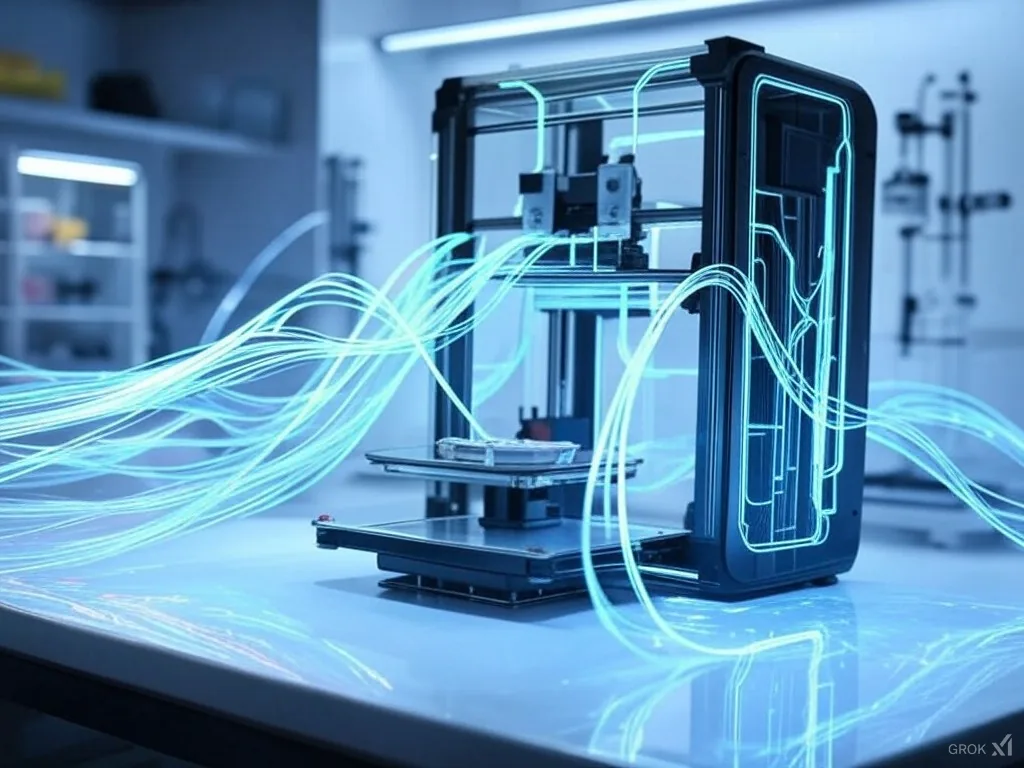
The AI Revolution in FDM 3D Printing: Transforming the Future of Manufacturing
3D printing, specifically fused deposition modeling (FDM) technology, is undergoing a revolution thanks to the integration of Artificial Intelligence (AI). At Tucab, we are exploring how AI can transform each stage of the manufacturing process, from conception to final production, offering innovative and efficient solutions to our customers.
In FDM 3d printing, the same can also be done, and here are some examples:
Print Parameter Optimization: AI allows automatic adjustments in critical parameters such as temperature, printing speed and material flow. This ensures consistent print quality by detecting and correcting faults in real time. For example, if a layer doesn't adhere correctly, AI can adjust the print bed temperature or fan speed instantly.
Generative Design: AI is a powerful tool for generative design, creating models that are optimized for print efficiency, minimizing material usage while maintaining required strength and functionality. This is especially useful for custom parts or parts with specific performance requirements.
Personalization and Customization: In industries such as fashion or medicine, AI offers the ability to produce highly personalized items, adjusting designs to customer preferences. Tailored shoes or perfectly adapted prosthetics are concrete examples of this application.
Predictive Maintenance: AI allows you to predict when printer components will need maintenance, analyzing data from sensors to prevent failures before they occur, saving time and money.
Automated Quality Control: With computer vision systems, AI can inspect printed parts, ensuring that only those that meet quality standards proceed. This improves product consistency and reduces waste.
Scale Production Management: AI can optimize how a fleet of 3D printers is utilized, prioritizing jobs based on urgency, material availability and machine capacity, resulting in more efficient production.
Material and Configuration Suggestions: Based on past experience, AI can recommend the best material and configurations for specific projects, taking into account factors such as durability, thermal resistance and aesthetics.
Real-Time Error Correction and Adaptation to Material Failures: AI not only corrects errors during printing but also adapts to variations in material batches, ensuring quality even with inconsistent materials.
Continuous Learning for New Materials: As new materials enter the market, AI can quickly learn how to work with them, adjusting parameters to get the best results.
Automatic Support and Support Structures: AI can determine the minimum amount of support needed, saving material and time.
Integration with Supply Chains: AI can predict demands and manage stocks, preventing stockouts and optimizing material flow.
Print Simulation and Immediate Feedback: AI can simulate prints before actual production, allowing adjustments that prevent failures and accelerate product development.
Color, Texture, Scale and Proportion Adjustment: For products where aesthetics are important, AI can adjust colors and textures, or resize models while maintaining proportions and structural integrity.
Integrating AI into FDM 3D printing not only increases precision and efficiency but also opens up a world of possibilities for innovation, customization and sustainability in manufacturing. We are at the forefront of this transformation, leading the way into a future where technology and creativity meet to create products that were previously unthinkable.