
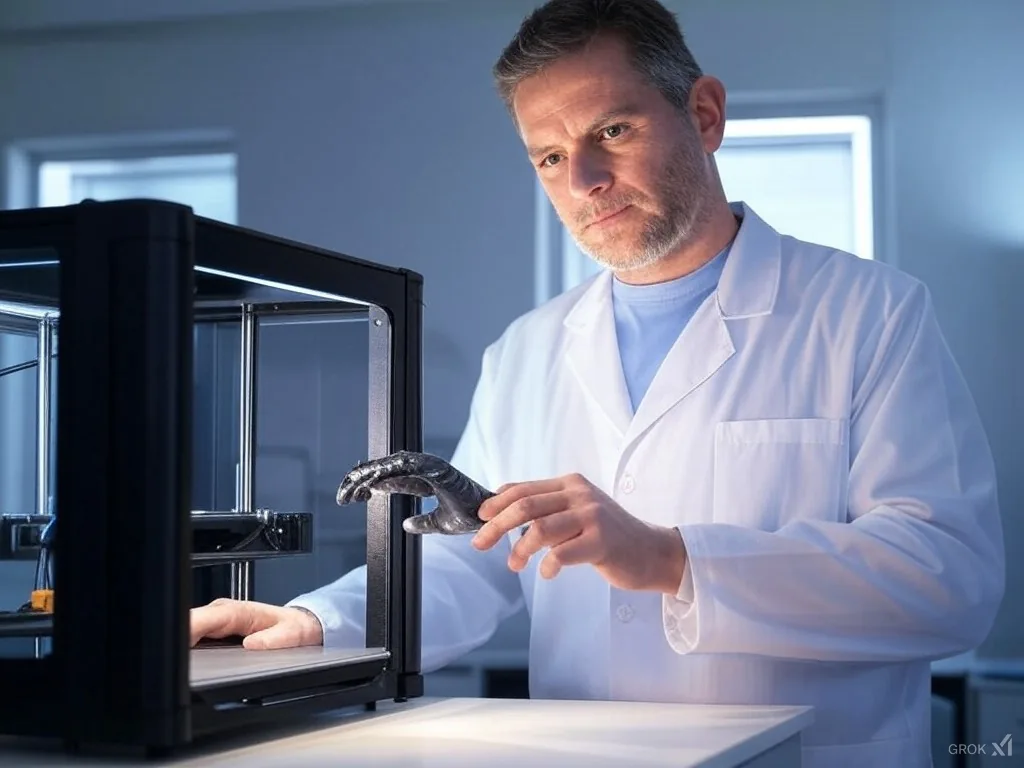
FDM 3D printing is transforming the field of medicine, offering innovative solutions ranging from custom prosthetics to artificial organs, improving quality of life and accessibility to healthcare around the world.
Customized Prosthetics
The ability to precisely customize prosthetics through FDM 3D printing means that each device can be tailored exactly to the patient's needs, improving comfort and functionality. This is particularly important for children, whose needs change as they grow.
Practical Example: Prosthetics in Developing Countries
In Brazil, a hospital used FDM 3D printing to create prosthetic hands for children with congenital malformations or amputations. These prostheses are not only more accessible due to low production costs but can also be replaced as children grow, without the exorbitant costs associated with traditional prostheses.
Implants and Artificial Organs
The technology allows the production of bone or joint implants with biocompatible materials, which adjust perfectly to the patient's body, reducing the risk of rejection and improving recovery. Additionally, research is advancing in the field of bioprinting, where human cells are used to create tissues or organs.
Impact on Accessibility
FDM 3D printing democratizes access to advanced medical solutions, allowing hospitals and clinics in less developed regions to locally produce medical devices that would otherwise be expensive or difficult to obtain.
Conclusion
3D printing FDM is opening new frontiers in medicine, offering personalized, economical and accessible solutions. At Tucab, we are proud to be at the forefront of this revolution, contributing to a future where technology can save and improve lives. For more details on how 3D printing can benefit your healthcare institution, visit tucab.pt.