
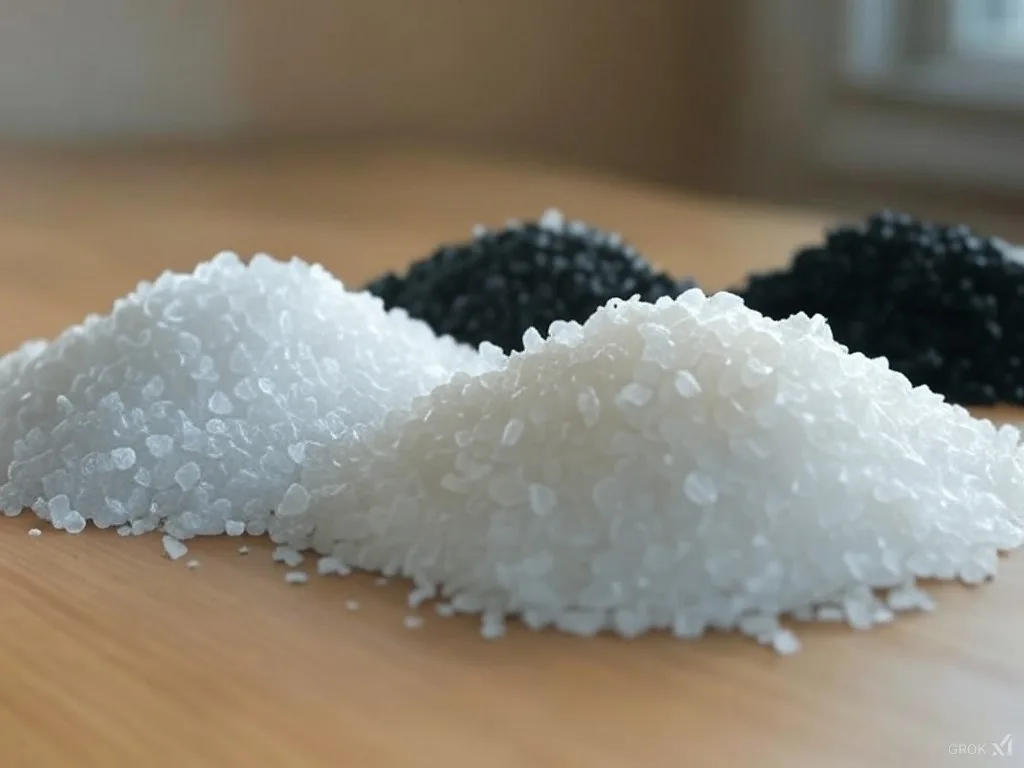
This report expands the comparative analysis between EPDM (Ethylene Propylene Diene Monomer) and SEBS (Styrene-Ethylene-Butylene-Styrene), detailing the properties, applications and environmental impacts, focusing on the viability of SEBS as an alternative and its suitability for Tucab solutions, especially in the PERSEBS line. The analysis incorporates information from a recent master's thesis, conducted by the University of Coimbra in collaboration with Tucab, to provide a complete picture.
Context and Definitions
EPDM is a vulcanized synthetic rubber, known for its resistance to weather, ozone and heat, and is widely used in automotive seals, roof membranes and electrical insulation (EPDM Rubber Properties, Applications, and Uses). SEBS is a thermoplastic elastomer, with a block copolymer structure, offering rubber elasticity and plastic processability, used in adhesives, seals and medical devices (Styrene-Ethylene-Butylene-Styrene Thermoplastic Elastomer (SEBS)).
Detailed Technical Properties
The table below summarizes the physical properties compared, based on manufacturer data, technical literature and the recent study:
| Property | EPDM | SEBS |
|---|---|---|
| Tensile Strength | 2.4-20.7 MPa (350-3000 psi) | 4-6 MPa |
| Elongation at Break | 100%-700% | 700%-800% |
| Hardness | 30-90 Shore A | 45-60 Shore A (depends on formulation) |
| Specific Density | 0.86-1.25 | 0.92 |
| Compressive Strength (22h at 70°C) | 10%-50% (EPDM); 20% (typical SEBS) | 20% |
| Temperature Range | -50°C to 150°C (up to 200°C in some cases) | -60°C to 149°C |
| Tear Strength | 12-110 kN/m (70-630 lbf/in) | 12 kN/m (typical) |
| Dielectric Strength | 15-30 kV/mm (380-760 V/mil) | Not specified, but good insulating |
| Chemical Resistance | Excellent to water, ozone, does not resist hydrocarbons | Good resistance to water, acids, bases, does not resist hydrocarbons |
Sources: EPDM Properties, SEBS Mechanical Properties, Rubber Properties Table for Comparison.
The recent study, led by David Miguel Nunes Pereira, adds important details. It included tests such as Fourier Transform Infrared Spectroscopy (FTIR), Elemental Analysis, compression tests, Differential Scanning Calorimetry (DSC), Thermogravimetric Analysis (TGA) and Dynamic Mechanical Thermal Analysis (DMTA). The results showed that SEBS Black, a specific variant, has a Young's modulus of 8549.8 ± 230.7 kPa, compared to 8122.8 ± 596.5 kPa for EPDM, indicating higher stiffness but suitable for seals at ambient temperatures. TGA revealed that SEBS degrades in two steps (158–185°C and above 400°C), while EPDM showed greater initial thermal stability, but SEBS Black was found to be comparable in thermal stability in the second stage of mass loss.
Processing and Applications
EPDM requires vulcanization, making it thermosetting and difficult to recycle (Ethylene Propylene Diene Terpolymer (EPDM) Elastomeric Polymer Technology). SEBS, a thermoplastic, can be melted and reformed, offering advantages in terms of efficiency and sustainability (SEBS Properties and Applications Detailed Analysis). The study reinforces that the recyclability of SEBS promotes the Circular Economy, while EPDM often ends up in landfills.
Both are used in the automotive, construction and medical sectors, but SEBS stands out in applications where recyclability is crucial, such as in Tucab extruded profiles, such as PERSEBS, used in fences and frames.
Environmental Impact
Recyclability is a key factor: SEBS can be reprocessed, reducing waste, while EPDM, due to vulcanization, is difficult to recycle (Environmental Considerations). The recent study highlights that the use of TPEs such as SEBS can have a significant positive impact on sustainability, aligning with Circular Economy policies.
Feasibility as an Alternative
Comparative studies, such as the one in the dissertation, show that SEBS can improve properties such as chemical resistance in blends, being a viable alternative in many applications. Tucab uses SEBS in its PERSEBS profiles, highlighting its versatility and sustainability. The study concluded that SEBS Black is the best variant for seals, with comparable thermal stability and superior chemical resistance to EPDM, reinforcing its viability. Furthermore, the variability in the properties of SEBS allows adjusting the stiffness with fillers, expanding its range of applications.
Practical Examples of Products Switching from EPDM to SEBS
Although direct information is limited, sustainability trends in the automotive sector suggest that parts such as door seals, windows and gaskets, traditionally made with EPDM, are being considered for SEBS due to their recyclability. For example, ExxonMobil has developed SEBS-based TPV solutions as a sustainable alternative to glass channel seals (GRC), which previously used EPDM, offering comparable elastic recovery (Sustainable Automotive Weatherseals with SEBS Alternatives). In construction, sealants and membranes may also be moving to SEBS in modern designs.
Conclusion
SEBS is a viable alternative to EPDM, with superior properties in flexibility, chemical resistance and significant environmental benefits, especially in recyclability. For Tucab, SEBS is a strategic choice, reinforcing its commitment to innovation and sustainability in its products, as evidenced by the recent study in collaboration with the University of Coimbra.