
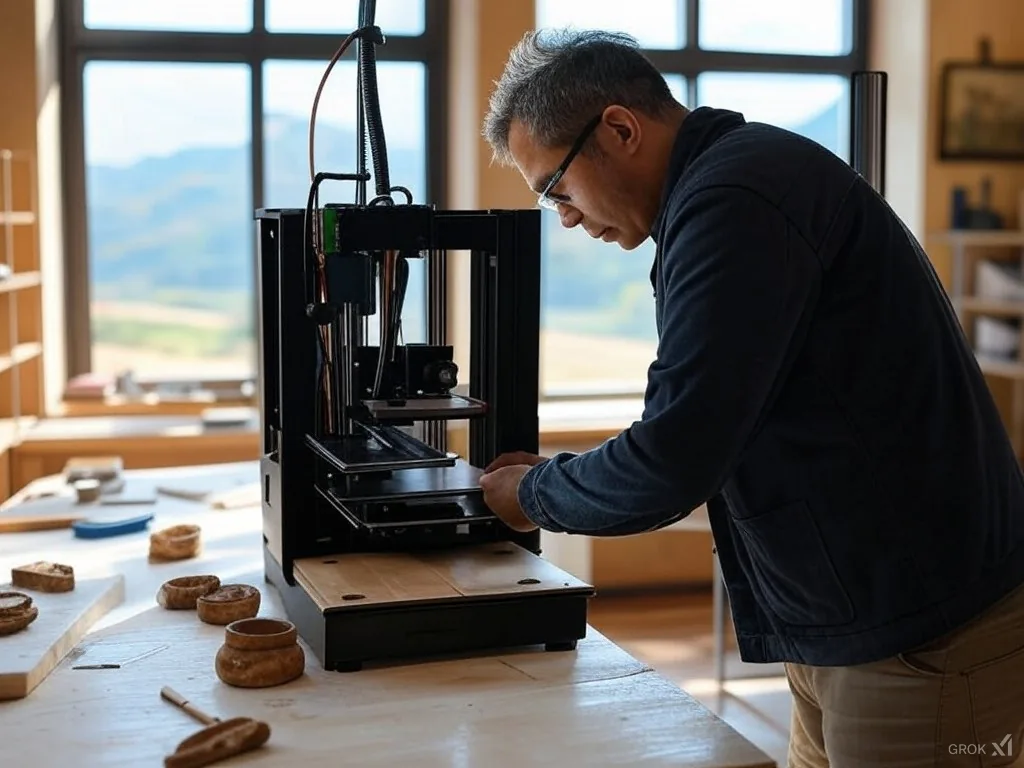
The preservation of cultural heritage is crucial to keeping the history and identity of a nation alive. FDM 3D printing is transforming this field, offering innovative methods for the conservation and restoration of historical and cultural pieces.
Precise Restoration
With FDM 3D printing, it is possible to create replicas exact parts or replacement parts for damaged artifacts, using 3D scanning to capture every detail accurately. This is particularly useful when the original pieces are too fragile to be manipulated or restored directly.
Practical Example: Statue Restoration in Italy
In Italy, following an earthquake that damaged several ancient statues, 3D printing was used to restore these masterpieces. The damaged pieces were digitized, and accurate replicas were 3D printed to replace the lost parts, thus preserving the historical and artistic integrity of the statues.
Heritage Education and Access
The technology also allows the creation of accessible replicas for museums and exhibitions, facilitating public access to pieces that would normally be stored for conservation reasons. These replicas can be used for educational purposes, allowing students and visitors to touch and interact with copies of artifacts without risk to the originals.
Digital Preservation
In addition to physical restoration, FDM 3D printing facilitates the digital preservation of heritage. Detailed 3D models can be stored digitally, creating a virtual archive that can be used for future restorations or for academic studies.
Conservation Challenges
One of the challenges is ensuring that the materials used in 3D printing are durable and, if possible, reversible, so that future generations can decide on alternative conservation techniques. Furthermore, fidelity to the original in terms of material and finish is an aspect that requires constant attention.
Conclusion
FDM 3D printing is redefining the way we approach the conservation and restoration of cultural heritage, offering accurate, educational and accessible methods. At Tucab, we are proud to contribute to the preservation of history and culture through this innovative technology. To explore how we can help preserve heritage with 3D printing, visit tucab.pt.