
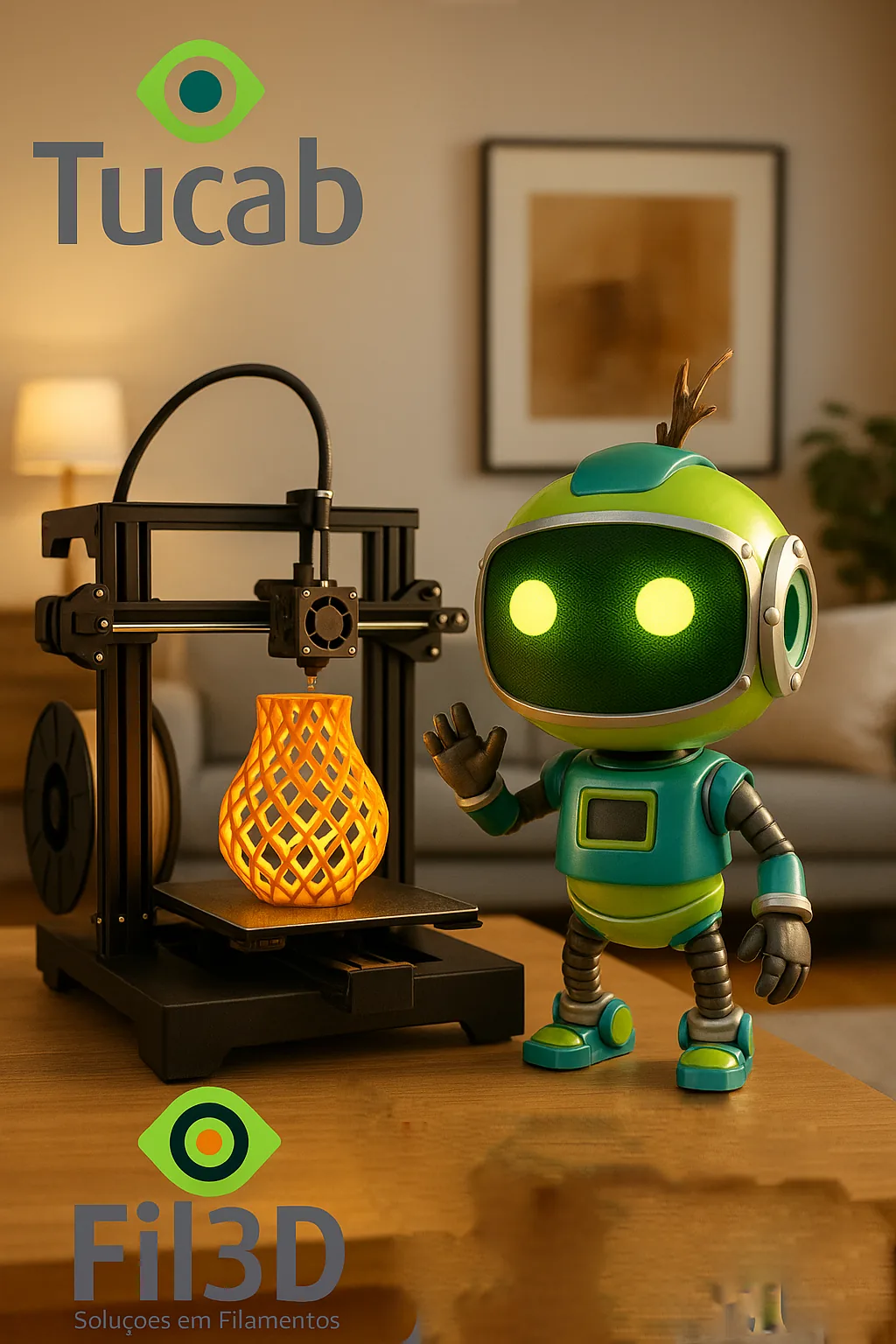
3D printing is no longer just a rapid prototyping tool to take on a central role in sectors such as interior design. Today, architects, decorators and designers use this technology to create unique pieces that combine aesthetics, functionality and innovation.
Creativity at the service of technology
In interior design, every detail counts. 3D printing allows you to transform digital models into real objects with total fidelity and creative freedom.
Some practical examples include:
-
Lamps and lampshades with complex geometries, impossible to produce by conventional methods.
-
Lightweight and optimized furniture structures, designed with parametric algorithms.
-
Wall coverings with 3D patterns inspired by natural textures (leaves, waves, minerals).
-
Personalized functional objects, such as modular organizers, technical supports or decorative dividers.
The power of 3D printing lies in the possibility of experimenting with free forms, without restrictions of expensive molds or mass production processes.
Technical filaments for interior design
At Fil3D® by TUCAB, raw material selection is critical to ensure aesthetics and durability.
-
PLA (Poly Lactic Acid)
-
Excellent definition of detail, ideal for decorative objects.
-
Wide variety of colors and finishes.
-
Biodegradable in industrial conditions, contributing to a more ecological design.
-
PETG (Polyethylene Terephthalate Glycol)
-
Combines mechanical resistance with transparency.
-
Perfect for pieces that require robustness and elegance, such as lamps or translucent partitions.
-
ABS (Acrylonitrile Butadiene Styrene)
-
Resistance to impact and higher temperatures.
-
Recommended for parts exposed to intense use or more demanding environments.
-
Fil2ndLife® (recycled)
-
Filament produced with reused raw material.
-
Sustainable alternative for ecological design projects.
-
Theory: from parametric design to generative design
3D printing is closely linked to new digital design paradigms:
-
Parametric Design: allows you to change variables (height, density, pattern) to generate different versions of a part in seconds.
-
Generative Design (AI + 3D printing): algorithms create shapes optimized in weight, resistance and aesthetics, which can only be manufactured using additive technologies.
-
Virtual Prototyping + Physical Printing: Before producing on a large scale, designers test colors, textures and proportions quickly.
The future of interior design with 3D printing
The evolution of technology and filaments opens up new opportunities:
-
Integration with smart lighting: lamps 3D printed with fittings for LEDs and IoT sensors.
-
Hybrid materials: filaments with natural fibers, wood or metallic particles, to create unique pieces with sophisticated aesthetics.
-
Decentralized production: each designer or client will be able to print pieces at home or in local hubs, reducing transportation and carbon footprint.
-
Modular architecture: walls, partitions and furniture can be created by large-scale 3D printing, with high-resistance technical filaments.
In interior design, 3D printing represents more than a trend: it is a tool of creative freedom that combines innovation, personalization and sustainability.
In Fil3D®, we develop filaments that make this vision a reality — today and in the future.Discover more about how 3D printing can transform your projects: tucab.pt
#Fil3D #TUCAB #Impressao3D #Interior Design #Inovacao #Sustentabilidade #Personalizacao