
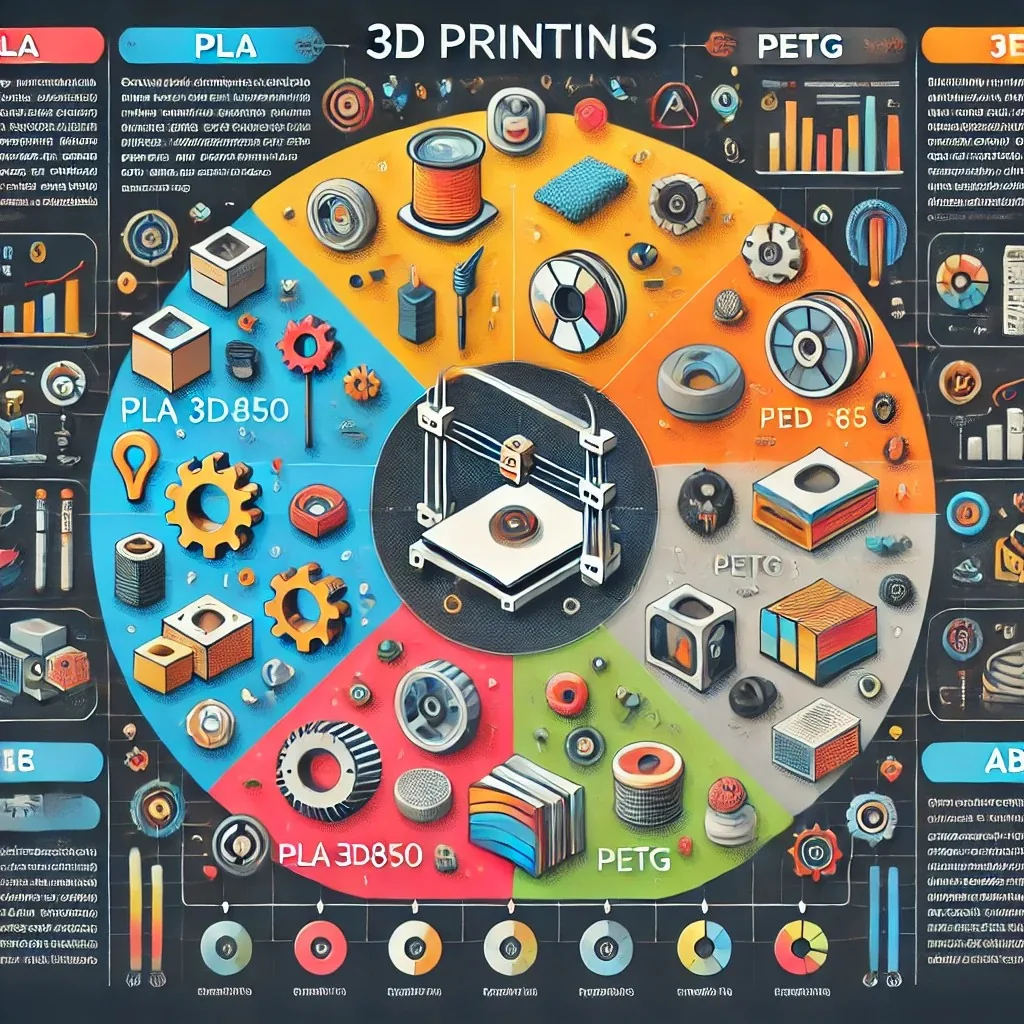
Choose the Perfect Material for your 3D Printing with Fil3D Filaments!
Temperature: Nozzle 190–220 °C; Table 0–60 °C.
Best Applications: Decorations, rapid prototypes and parts without mechanical or thermal demands.
PLA
Strengths: More resistant than common PLA; greater thermal and mechanical stability.
Weak Points: Higher price.
Temperature: Nozzle 200–230 °C; Table 30–70 °C.
Best Applications: Lightweight functional parts and high-resistance prototypes.
PETG (Polyethylene Terephthalate Glycol)
Strengths: High chemical, mechanical and thermal resistance (up to 80 °C); durable.
Weak Points: Difficult to adhere to the table and can generate stringing.
Temperature: Nozzle 220–250 °C; Table 70–90 °C.
Best Applications: Mechanical parts, resistant containers and prototypes for outdoor environments.
ABS (Acrylonitrile Butadiene Styrene)
Strengths: Resistant to impact and heat (up to 100 °C); smooth finish with acetone.
Weaknesses: Difficult to print; requires controlled environment.
Temperature: Nozzle 230–260 °C; Table 90–110 °C.
Best Applications: Industrial, automotive components and rugged parts.
Practical Summary:
PLA: Decoration and simple projects.
PLA: Rugged prototyping with good looks.
PETG: Ideal for functional and durable parts.
ABS: Industrial components that require maximum resistance.
Tip: For the best performance, adjust your printer according to the chosen material and prefer closed chambers for materials such as ABS.
Discover Fil3D filaments and choose the best one for your needs. creations!
Learn more.
#Fil3D #3D Printing #PETG #ABS #Materiais3D