
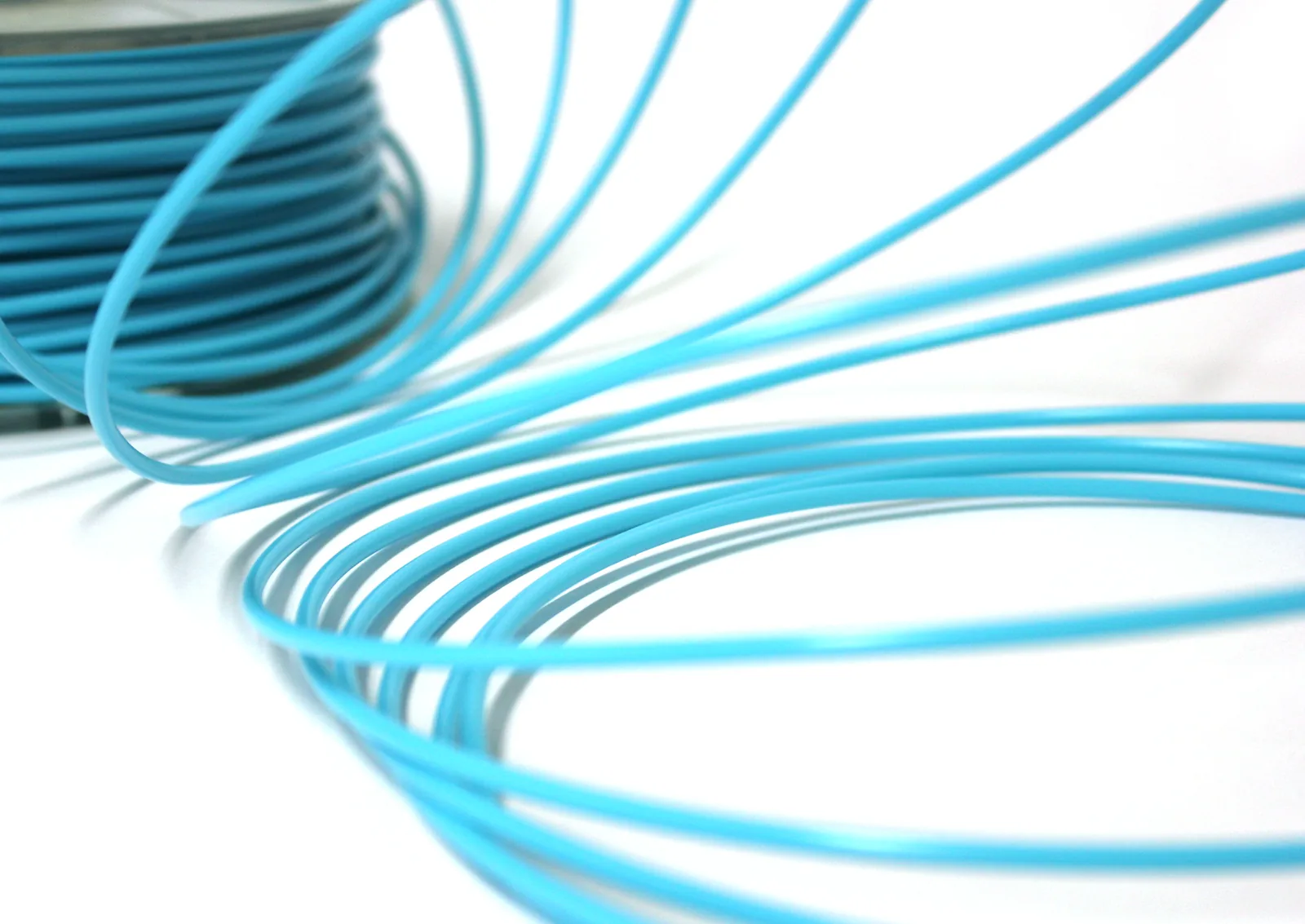
Technical information about 3d materials
With the world of 3D filaments evolving every day, we will show you some of the characteristics of each of the materials we manufacture.
| Product | Application | Temperatures | Observations | |
| Nozzle | Bed | |||
| ABS | DIY Projects Prototypes Functional models | 230ºC - 270ºC | 80ºC – 100ºC | Good stability dimensional |
| Medical ABS | Medical products | 230ºC - 270ºC | 80ºC – 100ºC | Biocompatible |
| EVA | Flexible prints | 210ºC – 260ºC | 60ºC – 100ºC | Flexible |
| Wood Fibers | DIY Projects Prototypes Artistic pieces | 205ºC – 235ºC | N.A. (if necessary, 60ºC) | Incorporates wood fibers |
| HIPS | DIY projects Support material | 220ºC – 270ºC | 65ºC – 110ºC | Support material |
| Nylon | Prototypes Art pieces Functional models Medical products Tools | 235ºC – 270ºC | 90ºC – 110ºC | Resistant and suitable for technical applications |
| PETG | DIY projects Prototypes Functional models | 220ºC – 240ºC | 50ºC – 70ºC | Biocompatible Versatile High transparency |
| PLA | DIY projects Prototypes Functional models | 185ºC – 230ºC | N.A. (if necessary, 50ºC – 70ºC) | Biodegradable Easy to print |
| PLA Ceramic | DIY projects Prototypes Functional models Artistic pieces | 190ºC – 210ºC | N.A. (if necessary, 50ºC – 70ºC) | Ceramic-like finish |
| PP | DIY projects Prototypes Functional models | 200ºC – 220ºC | 60ºC – 100ºC | Versatile and good mechanical resistance |
| PBT | DIY projects Prototypes Functional models | 230ºC – 270ºC | 90ºC – 110ºC | Good resistance to high temperatures |
| TPU | Flexible printing | 200ºC – 250ºC | 90ºC – 110ºC | Flexibility and resistance |
· The values shown are standard values, which may vary according to the 3D printing equipment used.
For technical/specific solutions, please contact us.