
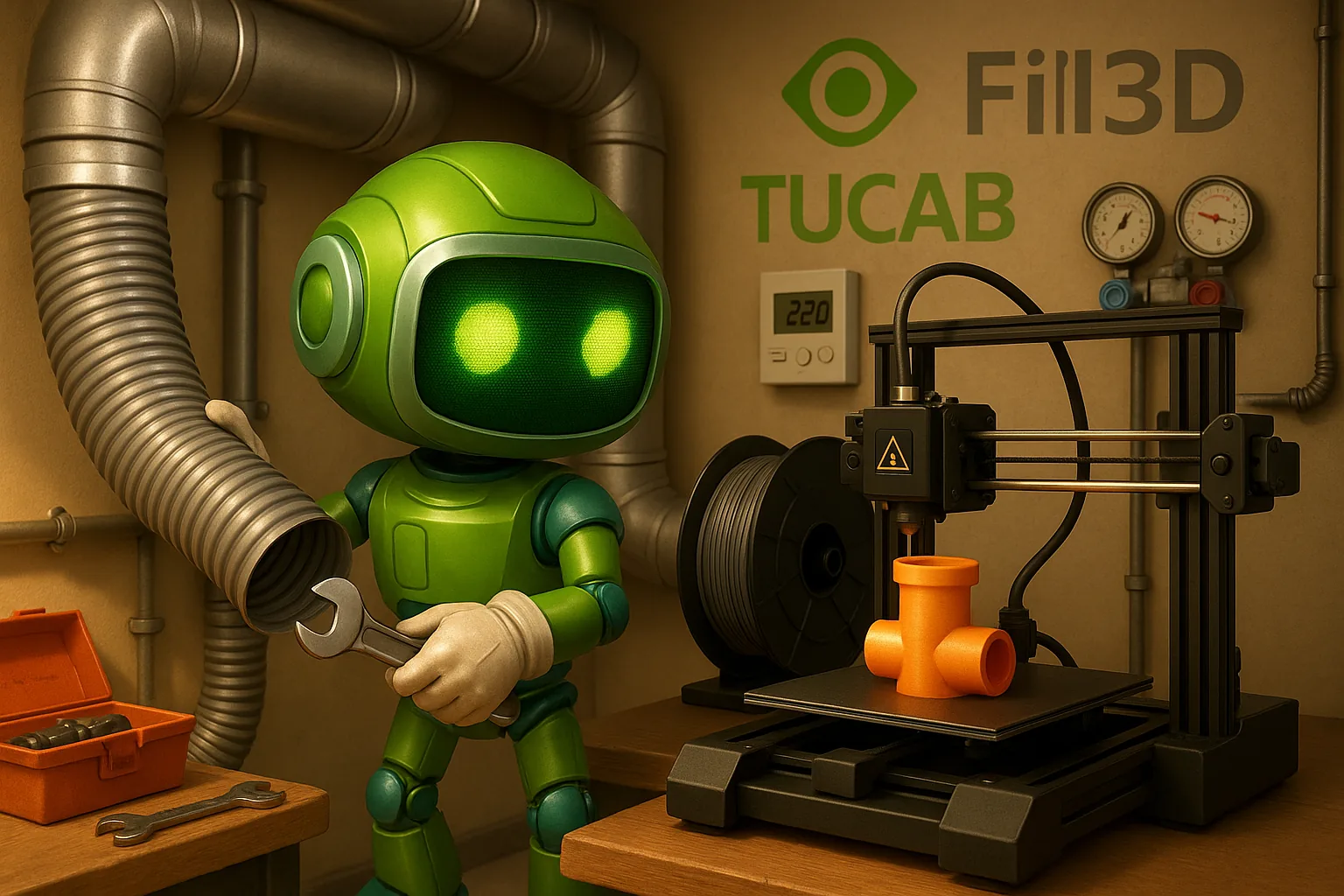
Optimized Flow – 3D Printing in HVAC Installations
Introduction
When we talk about air conditioning, ventilation and heating systems, we talk about precision, adaptation and... professional improvisation. Each installation is unique, with specific space, fit and assembly challenges. And this is where 3D printing comes in as a strategic partner for HVAC technicians.
Common problems, personalized solutions
Those who work in HVAC know the obstacles:
-
Tight spaces where traditional supports don't fit.
-
Old systems with out-of-print parts.
-
Fittings between pipes of different diameters.
-
Specific fixings required by standards or customer structures.
With 3D printing and Fil3D filaments, these obstacles are no longer an obstacle — they become an opportunity to shine with tailor-made solutions.
What can HVAC technicians print?
Duct supports customized – adapted to the building structure.
Special clamps and washers – for fixing to irregular walls.
Diameter reducers/adapters – to join pipes of different gauges without gaps.
Protective covers for sensors and probes – resistant, aesthetic and with perfect fit.
Templates for installation fast – which guarantee alignment and symmetry.
Why Fil3D? Because every layer counts.
Our filaments offer:
-
High thermal resistance (ideal for areas with hot or cold air flow).
-
Dimensional precision for perfect fits.
-
Variety of materials: PLA for parts static, PETG for technical environments, TPU for flexible fixings.
All this with professional and eco-friendly performance, as the future of the sector demands.
Practical example: adapter between industrial fans
A technician needed to connect two industrial fans with nozzles of different diameters, without the possibility of changing the parts originals.
In 3 hours, he designed and printed a PETG adapter with a perfect fit. Result: satisfied customer, zero delays, zero transportation costs or external orders.
Conclusion
3D printing is changing the way HVAC professionals work — more autonomy, more precision, less waste.
With Fil3D, technicians stop improvising… and start innovating.