
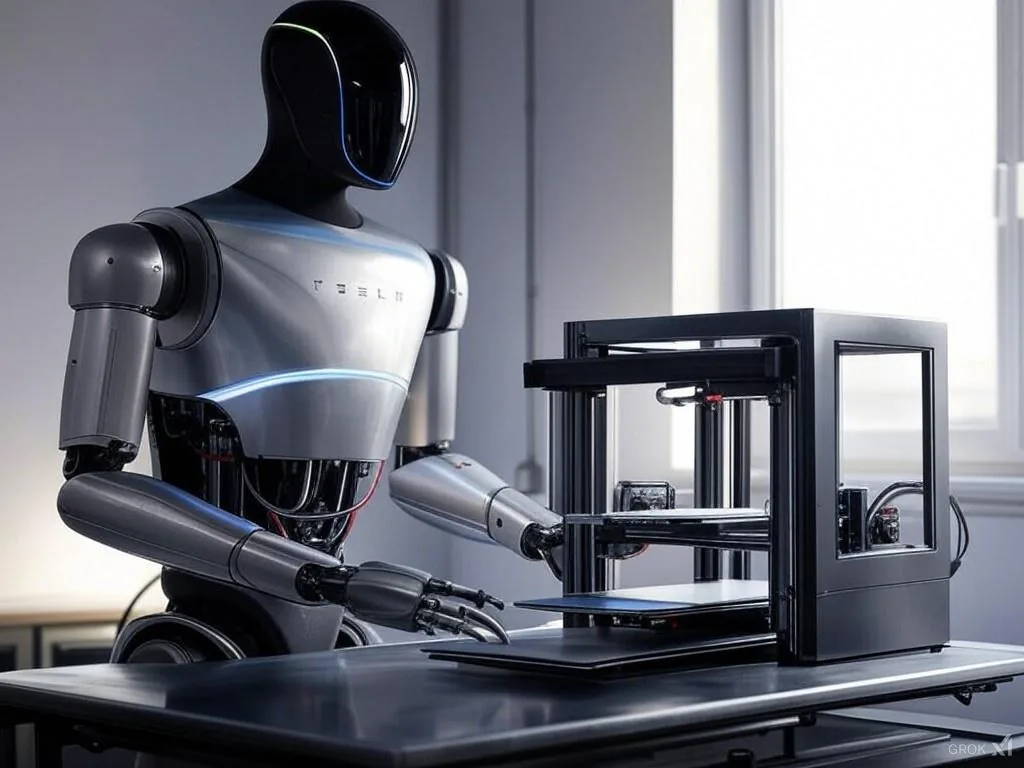
FDM 3D Printing: Revolutionizing Robot Building, Repairing and Improving
Introduction
3D printing, or additive manufacturing, has revolutionized several sectors by allowing the creation of complex objects in a way that was previously unthinkable. One of the most popular and accessible methods of this technology is FDM (Fused Deposition Modeling), which is based on the deposition of molten thermoplastic filaments layer by layer. This article explores how FDM 3D printing is being used specifically in building, repairing and improving robots.
What is FDM?
FDM is a technique where a plastic filament is pushed through a heated nozzle, which melts and deposits it in successive layers to form the desired object. Common materials include PLA (Polylactic Acid) and ABS (Acrylonitrile Butadiene Styrene), although there is a growing variety of materials with specific properties, such as flexibility or heat resistance. data-spread="false">
Rapid Prototyping: FDM allows engineers and designers to quickly test new design ideas without the need for expensive molds or specialized tools. This is particularly useful in developing custom parts for robots, where fit and function can be iterated efficiently.
Structural Parts: Components such as housings, supports and even more complex elements such as gears can be printed. This not only reduces costs but also allows parts to be customized to suit the specific needs of each robot.
Robot Repair
Replacement Parts: When robot parts wear out or break, 3D printing can provide quick and cost-effective solutions. Even if the robot is old or the parts are no longer in production, they can be recreated or adapted based on digital models or scans of the original parts.
Preventive Maintenance: Components susceptible to damage or wear can be printed in small quantities for preventative maintenance, ensuring that robots remain operational with minimal downtime.
Improvement and Customization Robots
Performance Upgrade: Parts can be redesigned to be lighter, stronger or more resistant to impacts, improving the robot's overall performance. The use of new materials or combinations of printed materials can also impart specific properties to components.
Challenges and Considerations
Quality and Durability: Although FDM is versatile, printed parts may not have the same strength or precision as traditionally molded or machined parts. Material choice and optimization of the printing process are crucial to obtaining quality parts.
Production Time: Although 3D printing is quick for prototyping, mass production continues to be slower when compared to traditional manufacturing methods.
Integration: Integrating printed parts with existing components may require adjustments or even re-engineering to ensure compatibility and functionality.
Conclusion
FDM 3D printing technology is transforming the way robots are built, repaired and improved. Its ability to produce custom parts quickly and cost-effectively makes it an essential tool for advancing robotics. From creating new robots to maintaining existing machines, this technology continues to expand possibilities in the field of automation and robotics. However, it is essential to balance innovation with the practical limitations of technology to achieve the best results.