
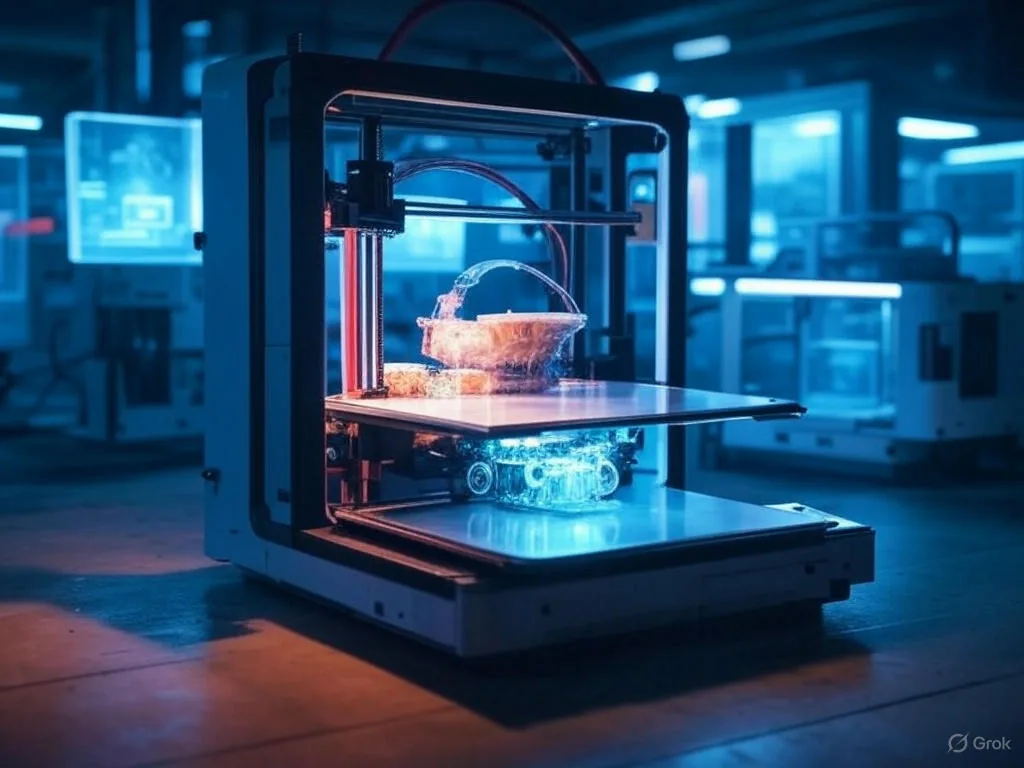
Fused Deposition Modeling (FDM) 3D printing is an affordable technology that uses thermoplastic filaments to create objects layer by layer. It is known for solving problems that traditional methods cannot, such as building large-scale houses or creating personalized prosthetics. This article explores how FDM, with filaments from brands like Tucab's Fil3d, has been an innovative solution.
Practical Examples
- 3D Printed Homes: Companies like Apis Cor use FDM to build houses in 24 hours, using extruded concrete, something impossible with traditional methods due to the volume (The Manufacturers of 3D Printed Houses - 3Dnatives).
- Spare Parts: FDM creates customized parts for rare machines, reducing costs and lead times wait, ideal for low volume productions (How 3D Printing is Transforming the Spare Parts Industry [2021 Update] - AMFG).
- Medical Devices: Provides patient-adapted prosthetics, accessible in resource-limited settings (Custom 3D Printed Medical Devices: Trends and Opportunities - Wevolver).
- Rapid Prototyping: In the automotive industry, FDM accelerates prototyping, as at Elite Mold & Engineering, essential for iterative designs (3D Printing for Automotive Prototypes: The Perfect Segue into Injection Molding - Elite Mold & Engineering).
Detailed Note: Complete and In-Depth Analysis
This article explores how Fused Deposition Modeling (FDM) 3D printing has been a unique solution to previously difficult problems or impossible to solve with traditional manufacturing methods. FDM, which uses thermoplastic filaments extruded layer by layer, stands out for its accessibility, reduced cost and ability to deal with complex geometries and large scales. The research conducted included a detailed analysis of specific applications, based on real examples and comparisons with other technologies, to highlight cases where FDM was the preferred or only viable choice.
Introduction to FDM Technology
FDM is an additive manufacturing process within the realm of material extrusion, where a thermoplastic filament is heated and selectively deposited in layers to form three-dimensional objects. It is the most widely used 3D printing technology, with the largest installed base of printers worldwide, due to its versatility, ease of use and diversity of materials. Features such as the ability to produce large parts, affordability and the possibility of using a wide range of thermoplastics make FDM unique in solving specific problems. For example, layer thickness can vary from 0.1 mm to 0.5 mm, affecting printing accuracy and time, with materials such as ABS for heat-resistant parts and PETG for a good combination of strength and flexibility. These include:
- Complex Geometries: Parts with intricate designs, such as internal channels or organic shapes, that are difficult to produce with subtractive methods. For example, FDM allows you to create parts with internal cavities without the need for disassembly, something that CNC machining cannot do economically.
- Large Sizes: Large-scale components, such as building structures, that exceed the capabilities of standard equipment. Industrial-scale FDM, such as home construction by Apis Cor, uses mobile printers that can create buildings up to three stories high, something other technologies like SLA or SLS cannot achieve due to limited construction volumes.
- Custom and Low-Volume Parts: One-off items, such as custom prosthetics, that do not justify the costs of setting up traditional production lines. FDM is ideal for single-unit productions, such as arm prosthetics for children, fitted to patient scans, offering affordable solutions in resource-limited settings.
- Rapid Prototyping: The need to quickly create working prototypes for iterative testing, especially in industries such as automotive where time to market is critical. FDM allows you to iterate designs in hours, like Elite Mold & Engineering, facilitating transitions to rapid injection molding.
FDM offers a flexible, scalable and cost-effective solution to these challenges, enabling the production of parts without the need for molds or tooling, with fast production times and less material waste. For example, its ability to use filaments such as Carbon Fiber PETG, offered by Tucab's Fil3d, ensures comparable or superior mechanical properties to traditional parts, especially in maintenance applications.
Detailed Case Studies
1. 3D Printed Houses with Large-Scale FDM Technology
- Issue: The construction of buildings with complex and large-scale designs, such as houses, is a challenge for traditional methods due to the high cost and difficulty of creating customized shapes. Methods such as reinforced concrete construction require expensive molds and long lead times, while FDM allows for organic, custom designs.
- Solution: Companies like Apis Cor, based in Melbourne, USA, use large-scale FDM printers to build houses within 24 hours, using materials such as extruded concrete. These printers, nicknamed "Frank", are mobile and can create buildings up to three stories high, offering elaborate designs that traditional methods cannot easily replicate (The Manufacturers of 3D Printed Houses - 3Dnatives). Interesting fact: the first 3D printed house in the US was completed in 2017, with costs reduced by 20% compared to traditional construction.
- Why FDM?: Other 3D printing technologies, such as SLS or SLA, have limited construction volumes, making them impractical for large-scale structures. FDM, especially in industrial versions, is the only 3D printing technology capable of handling the size and scale required for home construction, while also offering reduced costs and fast construction times. A technical detail: these printers can use extrusion nozzles with diameters of up to 50 mm to speed up the process, something that other technologies do not support.
2. Spare Parts for Rare Machines
- Problem: Old equipment or rare machines often face unavailability of spare parts, leading to costly downtime. For example, industrial machines from the 1980s may have obsolete parts, and the original suppliers no longer produce them, causing delays of weeks or months.
- Solution: FDM allows you to create customized parts based on 3D scans or original drawings, eliminating the need for extensive inventories. For example, the spare parts industry uses FDM to produce low-volume components, reducing costs and lead times, such as in the production of gears for older textile machines (How 3D Printing is Transforming the Spare Parts Industry [2021 Update] - AMFG). Fun fact: Deutsche Bahn, in Germany, uses FDM to manufacture spare parts for trains, reducing waiting times from weeks to days.
- Why FDM?: Compared to other technologies, FDM is more economical for low-volume production and offers affordability, especially in contexts where other forms of additive manufacturing, such as SLM, would be too expensive. It is also faster and more practical for unique pieces, where traditional mold configuration would be unfeasible. A technical detail: FDM can use filaments such as ABS for strong parts, with tolerances of ±0.2 mm, sufficient for most maintenance applications.
3. Customized Medical Devices
- Issue: Creating prosthetics, orthotics and other medical devices tailored to each patient's specific needs is a challenge, especially in terms of cost and time. Traditional methods, such as manual molding, are expensive and time-consuming, making large-scale customization difficult.
- Solution: FDM is used to produce devices such as arm prosthetics for children, offering affordable and personalized solutions. Its ability to create parts based on patient scans allows for precise adjustments, as seen in the case of custom medical devices such as orthopedic supports fitted to exact measurements (Custom 3D Printed Medical Devices: Trends and Opportunities - Wevolver). Interesting fact: the first 3D printed prosthesis was created in 2012 for an amputee patient, costing just 100 dollars, compared to thousands in traditional methods.
- Why FDM?: Although technologies such as SLA or SLS can offer greater precision, FDM is preferred in contexts where cost is a concern, such as in devices for large-scale medical use. Its affordability and ease of use make it ideal for applications where other technologies would be too complex or expensive, especially in developing countries or resource-limited medical facilities. A technical detail: FDM can use biocompatible filaments, such as medical PLA, tested for contact with the skin, ensuring safety.
4. Rapid Prototyping in the Automotive Industry
- Issue: The automotive industry faces the need to quickly iterate part designs, such as engine covers or aerodynamic parts, to reduce time to market. Traditional methods, such as CNC machining, can take days to prototype, delaying development.
- Solution: FDM allows the rapid production of functional prototypes, facilitating testing in real conditions before mass production. Companies like Elite Mold & Engineering use FDM for prototypes that easily transition to rapid injection molding, speeding up the design process (3D Printing for Automotive Prototypes: The Perfect Segue into Injection Molding - Elite Mold & Engineering). Fun fact: Ford uses FDM to create prototypes of interior parts, such as door panels, in less than 12 hours, something that previously took weeks.
- Why FDM?: The speed and low cost of FDM are unmatched for prototypes, enabling rapid iterations that traditional methods, such as CNC machining, cannot match in efficiency. Compared to other 3D printing technologies, FDM offers a unique combination of affordability and the ability to produce functional parts in hours, essential for the automotive industry. A technical detail: FDM can use filaments such as Reinforced Nylon for prototypes with properties similar to final parts, with tolerances of ±0.1 mm in high-precision printers.
Comparison with Other Technologies
To highlight why FDM is often the preferred or only viable choice, it is important to compare with other 3D printing technologies and traditional methods:
| Technology | Advantages | Limitations | Why FDM is Preferred |
| FDM | Low cost, easy to use, diverse materials, large parts | Lower resolution, visible layer lines | Ideal for large scales and low costs such as houses and prototypes |
| SLA | High resolution, smooth finish | Higher costs, limited build volumes | Less practical for large parts like houses, more expensive for custom medical devices |
| SLS | Tough parts, no need for supports | Expensive equipment, complex post-processing | Less affordable for low volume productions as spare parts |
| Traditional | High precision for high volumes, robust materials | High costs for unique parts, long lead times | Not viable for quick prototypes or complex designs where FDM shines |
This table illustrates how FDM stands out in accessibility, cost and scalability, being the preferred choice for the cases studied, especially where other technologies have significant limitations.
Technical Details and Curiosities
To enrich the article, here are some technical details and curiosities that make FDM even more fascinating:
- Technical Details: Layer thickness in FDM printers can vary from 0.1mm to 0.5mm, affecting accuracy and printing time. Materials like ABS are common for heat-resistant parts, while PETG offers a good combination of strength and flexibility. With high-quality filaments, such as those from Fil3d, a Tucab brand, printed parts can have mechanical characteristics comparable or superior to traditional parts, especially in maintenance applications. An unexpected technical detail: FDM can use filaments with additives such as carbon fiber, increasing resistance by up to 30%, ideal for structural parts.
- Curiosities: Did you know that NASA uses FDM 3D printing to create parts for the International Space Station, reducing the need to send replacement parts from Earth? Or that Ferrari uses 3D printed components in its racing cars to improve performance and aerodynamics, something that only FDM can do quickly and cheaply? An additional fun fact: the first 3D printed part in space was created in 2014, using an FDM printer aboard the ISS, marking a milestone in the history of technology.
- Statistics: According to a report from MarketsandMarkets, the global additive manufacturing market is expected to grow from USD 12.58 billion in 2020 to USD 34.80 billion in 2026, with compound annual growth of 17.4%. A Deloitte survey indicates that 40% of manufacturers are using or planning to use 3D printing for the production of spare parts, highlighting the relevance of FDM.
Context of Tucab and Fil3d
As a leader in plastics extrusion, Tucab, through its Fil3d brand, offers a wide range of printing filaments 3D. These filaments are tested to meet industry standards, ensuring the reliability of printed parts, especially in industrial maintenance applications. Whether creating spare parts, repairing components or prototyping solutions, Fil3d ensures companies have access to high-quality materials to maximize the benefits of FDM. A technical detail: Tucab uses extrusion lines to produce Fil3d filaments, with strict dimensional control, ensuring tolerances of ±0.05 mm, ideal for critical applications.
Conclusion
FDM 3D printing has revolutionized the resolution of problems that were previously difficult or impossible with traditional methods. From building large-scale homes to creating custom medical devices, FDM offers a practical, economical and efficient solution. Its ability to handle complex geometries, large sizes and low-volume production makes it indispensable in industries such as construction, maintenance, medicine and automotive. As technology continues to advance, FDM is expected to continue to play a crucial role in innovating and solving future challenges, especially with the support of brands like Fil3d.