
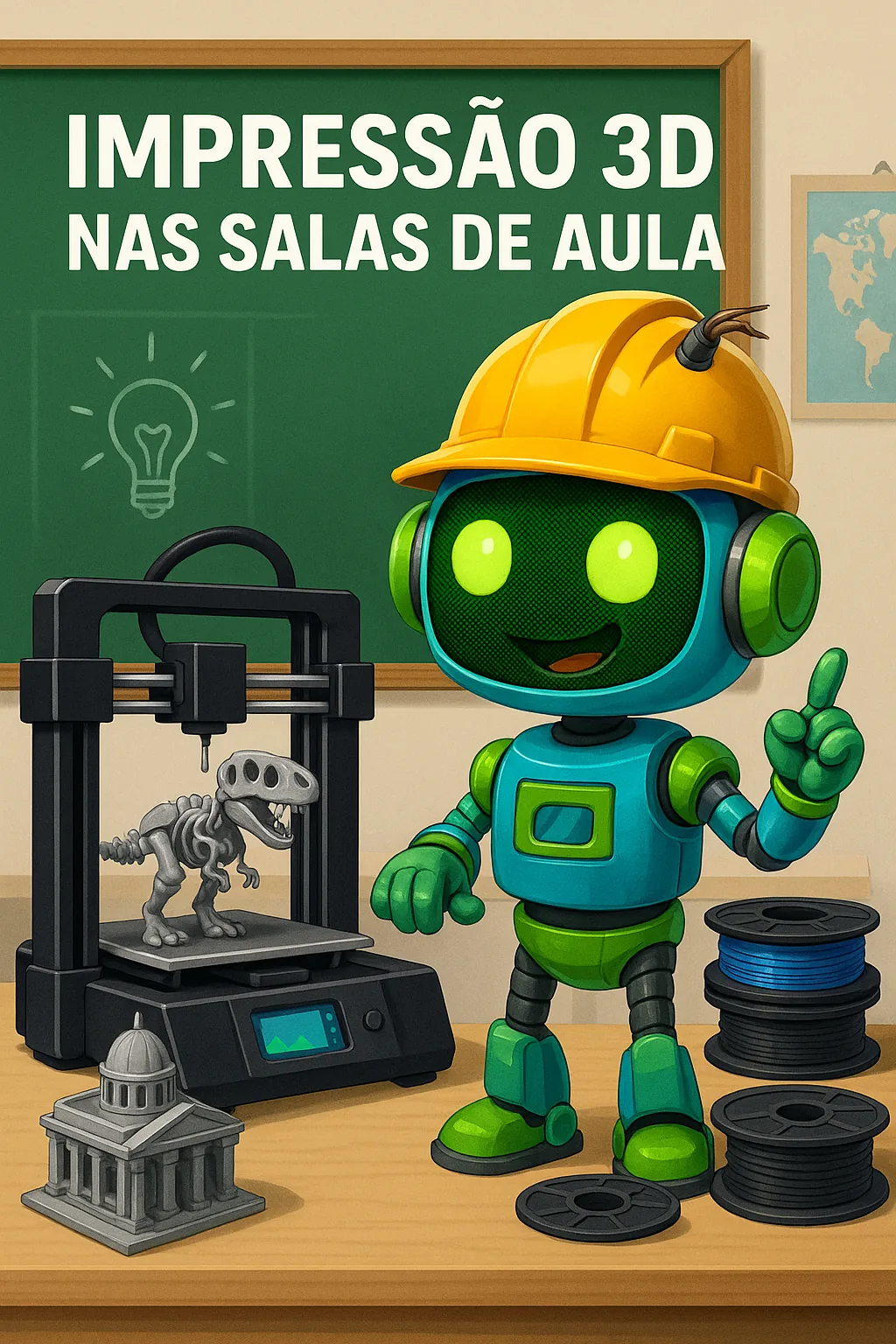
In a world where technology is constantly evolving, education needs to keep pace. 3D printing emerges as a powerful tool to make classes more interactive and engaging. At TUCAB, we believe that innovation can transform the way we teach and learn. In this article, we explore how FDM (Fused Deposition Modeling) 3D printing can be used by teachers in their daily lives, bringing practical examples and technical details to inspire educators to embrace this technology.
What Is FDM 3D Printing?
FDM 3D printing is a technology that creates three-dimensional objects layer by layer, using melted plastic filaments. It is one of the most affordable and versatile forms of 3D printing, ideal for educational environments. The main components of an FDM 3D printer include:
- Extruder Nozzle: Where the filament is melted and deposited.
- Print Bed: The surface where the object is built.
- Motors: Control the precise movement of the extruder.
The most common materials are PLA (polylactic acid), which is biodegradable and easy to use, and PETG, which offers greater resistance. These filaments are heated to temperatures between 190°C and 250°C, depending on the material, and deposited with precision to form the desired object.
How Can Teachers Use 3D Printing in Classes?
FDM 3D printing opens up a range of possibilities for teachers of different disciplines. Here are some practical examples:
- Science: Create a 3D model of a volcano, 15 cm high, printed in PLA. With a layer height of 0.2 mm, it takes around 6 hours to print and costs approximately €2 in filament. Students can explore the inner layers and even simulate eruptions with baking soda and vinegar.
- Math: Produce personalized rulers with raised geometric shapes, such as triangles and circles. A 20 cm ruler in PETG, with a layer height of 0.1 mm for greater detail, takes about 1 hour to print and costs less than €1.
- History: Print replicas of artefacts, such as a 10 cm Roman amphora in PLA with 10% infill. This model, which takes 3 hours to print, allows students to touch the story in a unique way.
- Art: Challenge students to create decorations for the room, such as bunnies or 3D Easter eggs, encouraging creativity.
Benefits of 3D Printing for Teachers and Students
The adoption of FDM 3D printing in education brings significant advantages:
- Personalization: Adapt teaching materials to students' specific needs, promoting more inclusive classes.
- Creativity: Encourage students to design and create their own objects, developing critical thinking.
- Preparation for the Future: Expose students to design and engineering tools, essential in a technological world.
- Accessibility: With increasingly affordable printers, this technology is within the reach of schools.
A Look at the Future
The potential of 3D printing in education is immense. In the future, we may see:
- Prototyping Laboratories: Spaces in schools where students develop complete projects.
- Integration with Artificial Intelligence: Tools that create 3D models from simple descriptions.
- Remote Education: Sending digital designs for printing at home by students.
Conclusion
At TUCAB, We are committed to supporting innovation in education. If you are a teacher and are curious about how 3D printing can transform your classes, we invite you to explore this technology. With our expertise in material extrusion and custom solutions, we can help you take the first steps on this journey. Together, we can build a more creative and inspiring future for our students.
Explore 3D Printing with TUCAB and Transform Your Classroom!