
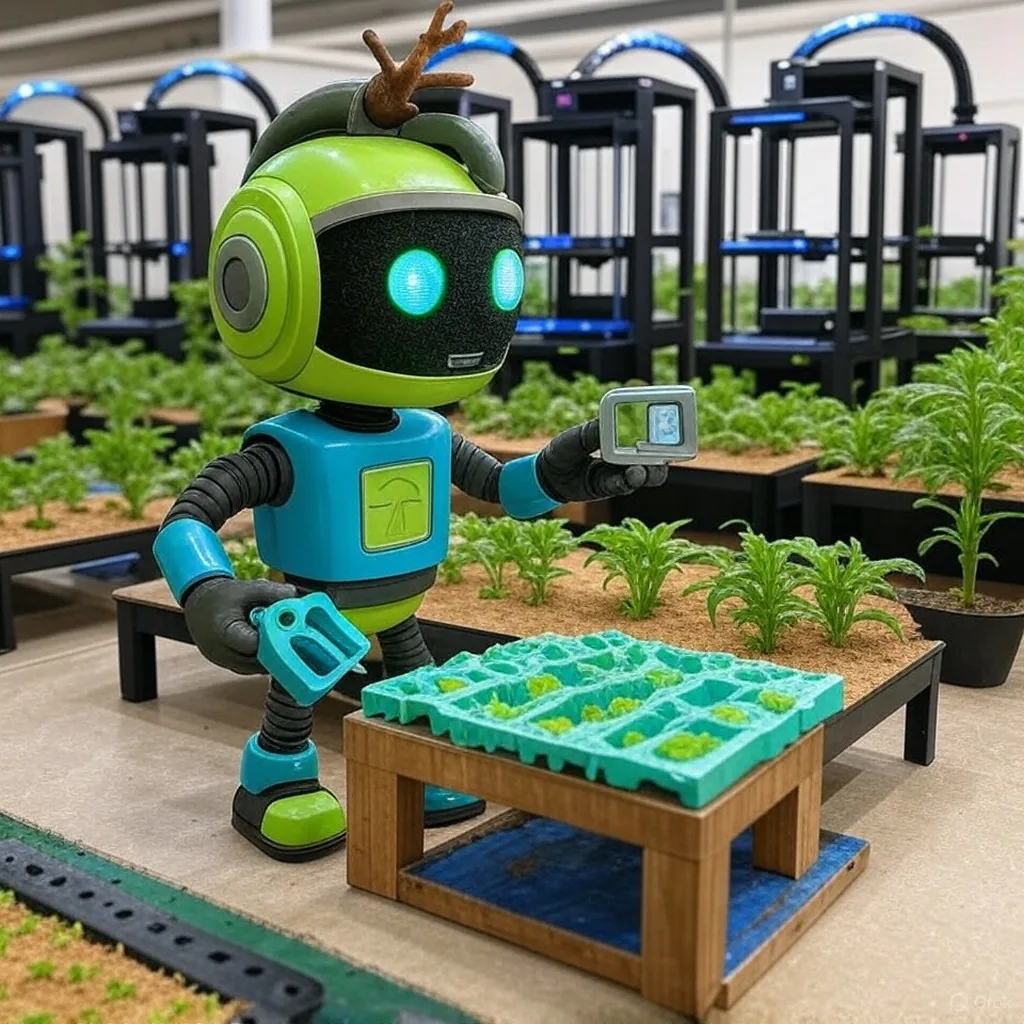
FDM 3D Printing in Agriculture: Innovation at the Service of the Countryside
Agriculture is one of the oldest and most essential industries in the world, and technological innovation has been fundamental to its development. In recent years, FDM (Fused Deposition Modeling) 3D printing has emerged as a revolutionary tool, allowing farmers to create customized solutions directly in the field. At TUCAB, we are committed to supporting this innovation with our high-quality filaments, such as FIL3D, which are ideal for agricultural applications. In this article, we explore how FDM 3D printing is transforming agriculture, with technical details, practical examples and a look to the future.
What Is FDM 3D Printing and How Can It Benefit Agriculture?
FDM 3D printing is a technology that builds three-dimensional objects by depositing successive layers of molten material, such as PLA, PETG or TPU. These filaments are heated and extruded through a nozzle, forming personalized parts based on a digital model. In agriculture, this customization capability is crucial as it allows farmers to create tools, spare parts and components tailored to their specific needs without relying on external suppliers.
Furthermore, FDM 3D printing is affordable and can be implemented directly in agricultural fields, increasing autonomy and reducing costs, especially in remote areas where access to parts may be limited.
Technical Details: Materials and Printing Parameters
To use FDM 3D printing in agriculture, it is important to understand the appropriate materials and technical parameters:
- Materials:
- PLA (Polylactic Acid): Biodegradable and easy to print, ideal for temporary tools or molds. Requires extrusion temperatures between 190°C and 220°C.
- PETG: Tough and durable, perfect for parts exposed to sun, rain or impact, such as sensor supports or irrigation connectors. Extruded between 230°C and 250°C, it supports forces of up to 50 MPa.
- TPU (Thermoplastic Polyurethane): Flexible and elastic, used in parts that require flexibility, such as hoses or adjustable supports. Extrusion temperature between 220°C and 240°C.
- Printing Parameters:
- Layer Height: 0.1 mm for fine details (e.g. complex molds) or 0.3 mm for fast prints (e.g. simple parts).
- Print Speed: 40-60 mm/s, which can be reduced to 30 mm/s in detailed parts, such as sensor supports.
- Infill: 20% for light parts (e.g. plant stakes) or 50-100% for weight-bearing parts (e.g. gears).
- Heated Bed: 50-60°C for PLA and PETG, to avoid deformation; optional for TPU.
Software like Tinkercad (for simple designs) or Fusion 360 (for more complex projects) allows you to create models, while slicers like Cura adjust the parameters for printing.
Practical Examples: How 3D Printing is Transforming Agriculture
FDM 3D printing offers practical solutions that can be implemented directly into farmers' daily lives. Here are some examples:
- Soil Sensor Holder: A farmer can print a holder for a PETG moisture sensor, fitted to his monitoring system. With a layer height of 0.2 mm and infill of 30%, the part takes 2 hours to print and costs around €1 in filament. This support is weather resistant, ensuring the sensor's durability in the field.
- Custom Plant Stake: To support vines or delicate plants, a stake printed in PLA measuring 20 cm high, 0.3 mm layer and 20% infill, takes 3 hours to print and costs €1.50. Being biodegradable, the stake minimizes environmental impact.
- Tractor Spare Part: In case of breakdown, a farmer can print a button for the tractor control panel in PETG, with a layer of 0.15 mm and 50% infill. The part takes 1 hour to print and costs €0.80, avoiding costly downtime and maintaining productivity.
- Connectors for Irrigation Systems: Using PLA for prototypes and PETG for final parts, farmers can create customized connectors that perfectly adapt to their needs, reducing leaks and improving irrigation efficiency.
These examples demonstrate how FDM 3D printing can be a valuable tool for farmers, offering solutions fast, economical and adapted.
Benefits of 3D Printing in Agriculture
The adoption of FDM 3D printing brings several advantages to farmers:
- Autonomy: Producing parts on site reduces dependence on external suppliers, especially in remote areas, increasing operational independence.
- Cost Reduction: Printing customized parts is more economical than acquire commercial solutions, especially for single or low-volume components.
- Speed: The ability to print a part in a few hours eliminates wait times, enabling rapid response to problems in the field and maintaining productivity.
- Sustainability: Using biodegradable PLA for temporary tooling reduces waste, aligning with more environmentally friendly agricultural practices.
A Look to the Future: The Potential of 3D Printing in Agriculture
The future of 3D printing in agriculture is promising and could include:
- Printing with Advanced Materials: Development of filaments with specific properties for agriculture, such as biodegradable materials for use in crops or filaments with additives for greater resistance to UV and humidity.
- Integration with Smart Technologies: Combining 3D printing with IoT (Internet of Things) to create devices that automatically monitor and adjust soil or crop conditions, such as personalized sensors printed on PETG.
- Rapid Prototyping: Test agricultural tool designs before manufacturing on a large scale, reducing risks and costs in new projects.
- Agricultural Education: 3D models to teach about plants, soils or irrigation systems, promoting sustainable practices and training the next generation of farmers.
- Local Production of Structures: Although still in its early stages, large format 3D printing can be used to create greenhouse or small greenhouse components buildings, such as warehouses, directly on the farm.
While large-scale adoption depends on access to technology, training and infrastructure, the potential to transform agriculture is significant, bringing benefits to both producers and the environment.
Conclusion
FDM 3D printing is opening up new possibilities for farmers, offering personalized, economical and accessible solutions for everyday life in the field. With TUCAB's FIL3D filaments, users have access to high-quality materials that guarantee accurate and long-lasting prints. As technology advances, its impact on agriculture is expected to be even greater, cultivating a more innovative and sustainable future.
Discover FIL3D and Elevate Your Farming!
For more information about FIL3D filaments and how they can be used on your farm, visit our website or contact our team.