
FDM 3D Printing in Children's Robotics Education: How Educators Use Technology to Inspire the Future with Tucab
Teaching Robotics with Creativity and Technology
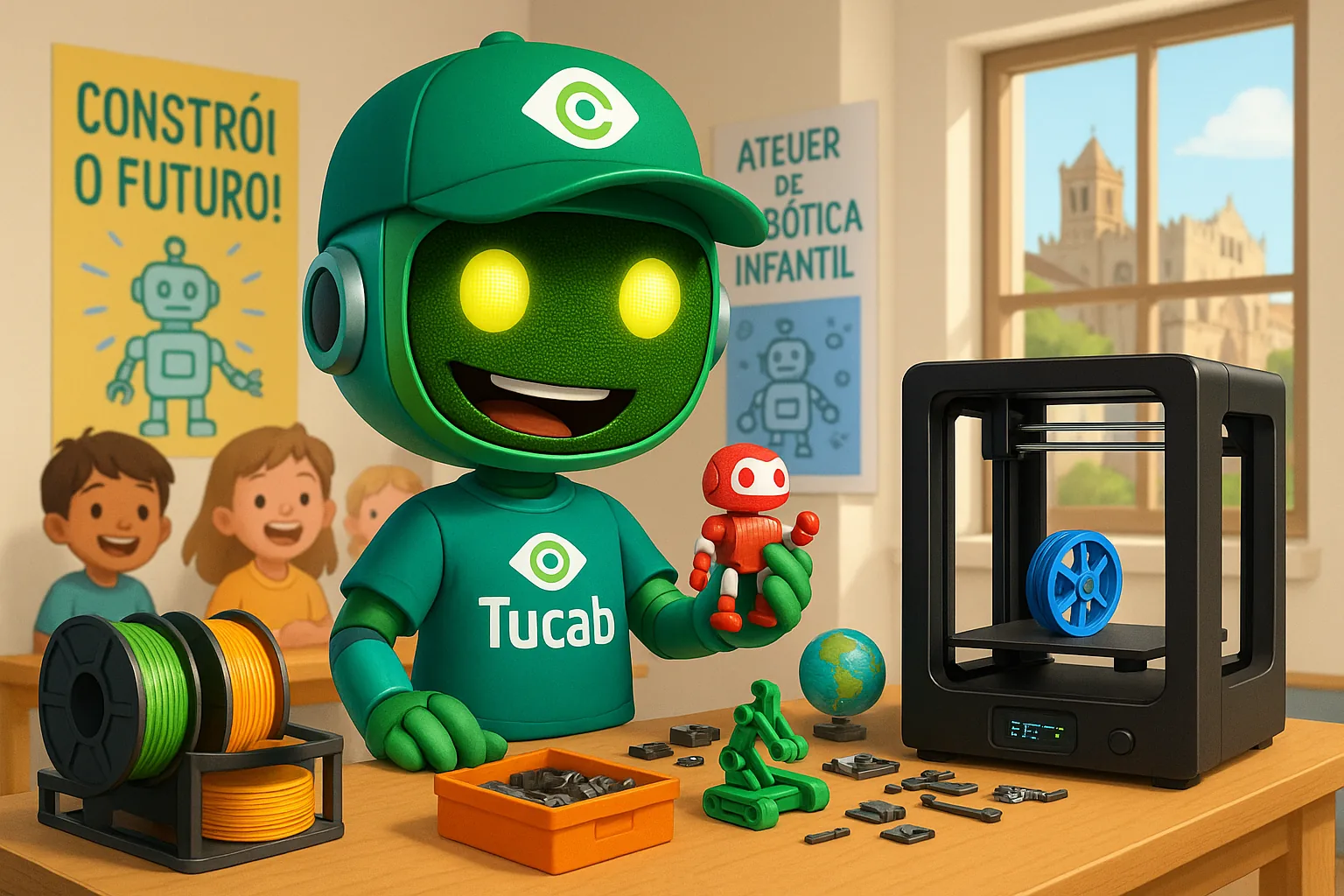
In an increasingly technological world, teaching robotics to children is preparing the future! Children's robotics educators have a mission to awaken the curiosity and creativity of young people, and FDM 3D printing is becoming a powerful ally in this adventure. With Tucab's FIL3D filaments, these professionals create parts for robots, teaching tools and educational materials that transform the classroom into a space for innovation. Let's find out how 3D printing is revolutionizing the daily lives of these educators and inspiring the next generation of inventors!
How FDM 3D Printing is Transforming Children's Robotics Education
FDM 3D printing allows you to create objects layer by layer, using filaments like Tucab's FIL3D PLA. For early childhood robotics educators, this technology opens up a world of possibilities. Let's see how they use it:
- Custom Parts for Robots:
During classes, children build small robots, such as cars or robotic arms. Educators can use 3D printing to create specific parts, such as wheels or gears, with FIL3D filaments in cheerful colors, such as blue, red and yellow, making projects more fun and functional. - Interactive Teaching Tools:
3D printing allows you to create educational models, such as a small robot with moving parts to teach mechanics concepts. An educator can print a model with green and white FIL3D, which children can assemble and disassemble, learning while they play. - Support Materials for Workshops:
In robotics workshops, the educator can print supports for sensors, boxes to store components or even boards with instructions, all with FIL3D filaments. For example, an orange FIL3D storage box helps children keep their projects organized. - Sustainability in Education:
Tucab's FIL3D PLA filaments are biodegradable and recycled, allowing educators to teach children not only about robotics, but also about the importance of caring for the environment. - Project Prototyping:
Before presenting a new project to children, the educator can test ideas by printing prototypes. For example, you can create a robotic cart with black FIL3D and adjust the design until it's perfect for the class.
A Day in the Life of a Children's Robotics Educator
Meet Sofia, a children's robotics educator who teaches at an educational center in Coimbra. Today, Sofia is preparing a workshop for children aged 8 to 10, where they will build a small exploring robot with light sensors.
In the morning, Sofia uses her FDM 3D printer to create parts for the robots. Choose red FIL3D filament to print the wheels and white FIL3D for the robot body, ensuring that the colors are bright and appealing to children. While the printer works, it organizes the sensors and other electronic components in a box printed with blue FIL3D, which it created last week.
During class, the children are delighted to assemble the robots with the printed parts. Sofia uses a robotic arm model, also printed with green FIL3D, to explain how the sensors work. At the end, each child takes home a small 3D printed piece – a star with yellow FIL3D – as a souvenir of the atelier.
The Benefits that Make a Difference
- Creativity: The bright colors of FIL3D filaments make projects more fun, encouraging children to explore.
- Practical Learning: Printed pieces allow children to touch and manipulate, making it easier to understand complex concepts.
- Sustainability: With recycled FIL3D, educators teach environmental values from an early age.
- Flexibility: FDM 3D printing allows you to create customized parts for each project, adapting to the needs of each class.
The Future of Robotics Education with FDM 3D Printing
The future of children's robotics education is bright! With filaments like Tucab's FIL3D, we could see complete educational kits printed in 3D, with pieces that children can personalize, such as animal-themed robots or spaceships. Furthermore, 3D printing can be integrated into school curricula, allowing all children to have access to this technology.
Imagine a day when every classroom has a 3D printer, and children create their own robots with FIL3D, learning about technology, creativity and sustainability at the same time. Or educational centers that organize robotics fairs, where little inventors show their 3D printed projects to the public.
Inspire the Future with Tucab!
FDM 3D printing is transforming children's robotics education, giving educators tools to teach in a creative and sustainable way. With Tucab's FIL3D filaments, these professionals inspire children to dream big and build the future.
Do you want to know more about the impact of 3D printing on other professions? Explore our articles on heritage restoration and sustainable fashion!
And you, what do you think about using 3D printing to teach robotics to children? Share your opinion in the comments!
#Tucab #Imspiração3D #EducaçãoRobótica #FIL3D