
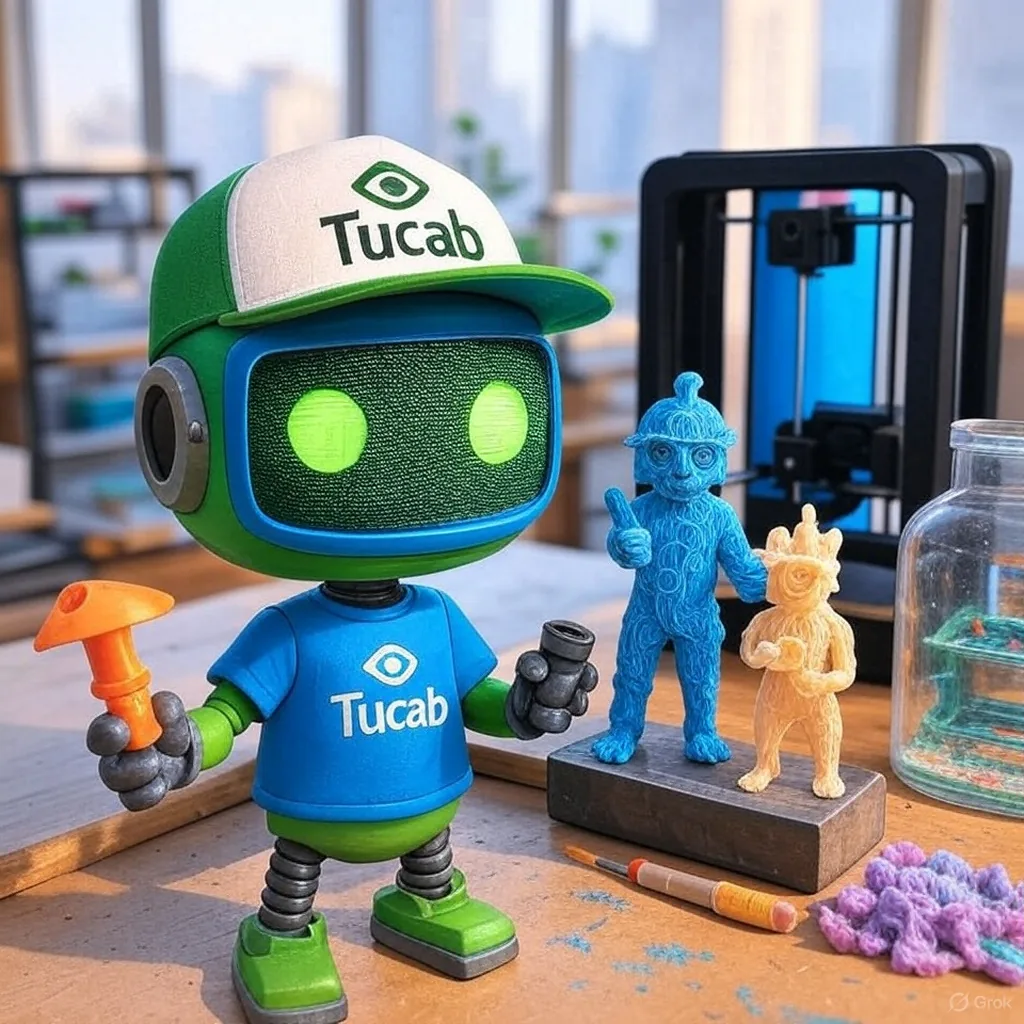
FDM 3D Printing in Sculpture: How Artists Are Transforming Art with Technology
Sculpture, one of the oldest art forms, is undergoing a revolution with the arrival of 3D printing. Studio artists, who previously relied on time-consuming manual techniques, can now use FDM technology to create detailed pieces, experiment with new materials, and even integrate virtual reality into the creative process. In this article, we explore how 3D printing, with filaments like those from Tucab, is changing the daily lives of sculptors, bringing innovation and accessibility to art.
How is 3D Printing Used in Sculpture?
- Creating Initial Models: Sculptors start by creating a digital model in programs like Zbrush or Oculus Medium, which allows you to sculpt in virtual reality. This model is then printed in 3D using filaments such as Tucab's FIL3D, available in different colors (blue, brown, white, among others), allowing for realistic finishes.
- Intricate Details: FDM 3D printing can reproduce intricate details that would be difficult or time-consuming to carve by hand. For example, artists can print pieces in clear or colored resins to create unique visual effects.
- Rapid Prototyping: Before finalizing a sculpture, artists can test multiple versions of the piece, tweaking the digital design and printing new iterations within hours.
- VR Integration: Virtual reality is reducing barriers for artists who struggle with 3D design. Programs like Oculus Medium allow you to digitally sculpt with your hands, and 3D printing brings these creations to life.
Benefits for Sculptors:
- Efficiency: What once took weeks to sculpt by hand can be printed in days, allowing artists to focus on creativity.
- Sustainability: Using biodegradable filaments like PLA, sculptors can create in a more environmentally friendly way.
- Accessibility: FDM 3D printing, with affordable printers and quality filaments like those from Tucab, makes the technology viable even for small studios.
- Customization: Each piece can be unique, adapted to the needs of the artist or client, which is ideal for custom orders or sculptures for film and animation.
Challenges:
- Learning Curve: Traditional artists may need training to master 3D modeling software.
- Material Limitations: Although FDM filaments are versatile, there are still limitations in terms of strength and finish compared to traditional materials such as bronze or marble.
- Initial Cost: Although affordable in the long term, the initial investment in printers and filaments can be an obstacle for some artists.
A Practical Example:
Let's imagine a sculptor in Lisbon who creates pieces for an exhibition about the 25th of April. Using an FDM printer and FIL3D filaments from Tucab, he digitally models a sculpture of Tucabito holding a carnation, symbolizing freedom. The model is printed in multiple colors, with details adjusted in Zbrush, and the final piece is displayed at the exhibition, attracting attention with its innovation and precision.
Conclusion:
FDM 3D printing is opening new doors for sculptors and studio artists, combining tradition and technology. With high-quality filaments like those from Tucab, artists can explore their creativity without limits, creating pieces that would have been unthinkable just a few years ago. If you are a sculptor or art lover, try 3D printing and discover how it can transform your work!
Want to know more about how 3D printing can revolutionize different professions? Read our article on the use of technology in agriculture and get inspired!
/pt/Noticias/Impressao-3D-FDM-na-Agricultura-Inovacao-ao-Servico-do-Campo-B373