
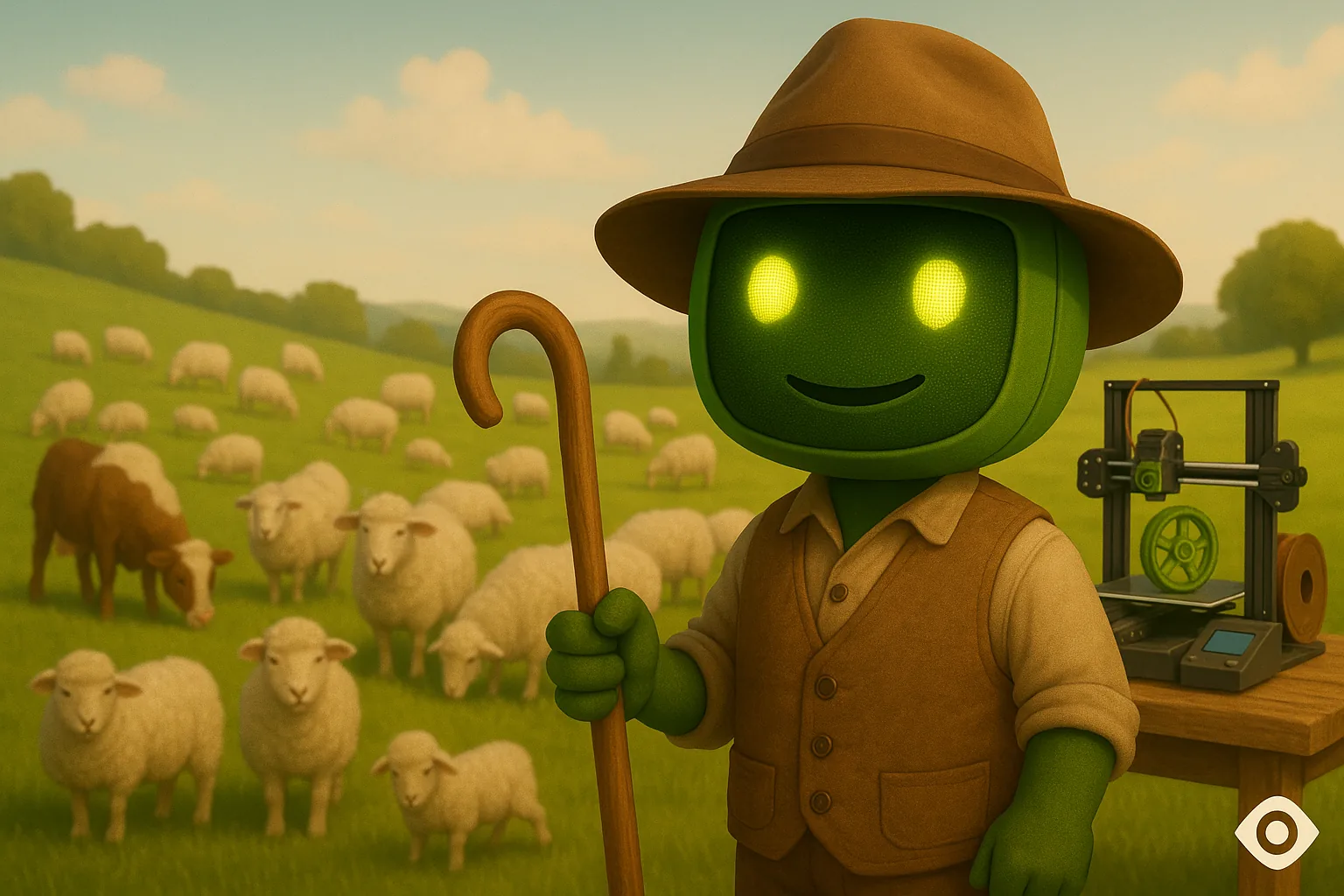
FDM 3D Printing in the Profession of Shepherd and Cattle Breeder: How Technology Supports Life in the Countryside with Tucab
Innovate in the Countryside with 3D Printing
Being a shepherd or cattle breeder is an ancestral profession, rooted in the tradition of caring for animals such as sheep, goats or cows, often in pastures open or under transhumance regime. In Portugal, shepherds, also known as “maiorais” in Alentejo, face daily challenges, from protecting the animals against bad weather to efficiently managing the herd. What if technology could make this job easier? With FDM 3D printing and Tucab's FIL3D filaments, pastoralists are discovering innovative ways to improve their daily lives, making tasks more practical, economical and sustainable. Let's explore how this technology is reaching the field and transforming the lives of these professionals!
How FDM 3D Printing is Supporting Shepherds and Livestock Breeders
FDM 3D printing allows you to create objects layer by layer, using filaments such as Tucab's FIL3D PLA. For pastoralists and livestock breeders, this technology offers practical and personalized solutions. Here's how they use it:
- Customized Tools and Accessories:
Shepherds need specific tools, such as hooks for managing livestock or supports for water buckets. With 3D printing, they can create these bespoke pieces using FIL3D filaments in colors such as beige or green, which blend well into the rural environment. For example, a sturdy FIL3D printed hook can help you open and close gates effortlessly.
- Cattle Tags:
Animal identification is essential for herd management. Creators can print custom earrings or nameplates with FIL3D PLA, in colors like yellow or blue, for easy viewing. These parts are light, durable and can include specific numbers or codes for each animal.
- Equipment Repair Parts:
In the field, equipment such as drinking fountains or fences can break down. Instead of waiting for replacement parts, the pastor can print components, such as a lid for a drinking fountain or a connector for a fence, using FIL3D in neutral tones, such as gray, ensuring a quick and economical solution.
- Educational Templates for Training:
Many pastors participate in training or agricultural fairs. 3D printing allows you to create educational models, such as replicas of sheep hooves in white FIL3D, to teach animal care techniques, or even miniatures of sheds to demonstrate traditional shelters.
- Sustainability in the Field:
Tucab's FIL3D PLA filaments are biodegradable and recycled, allowing shepherds to adopt more ecological practices, reducing waste and aligning their work with the preservation of nature.
A Day in the Life of a Shepherd with 3D Printing
Meet João, a shepherd and cattle breeder who works in Serra da Estrela, taking care of a flock of sheep. Today, João is preparing for a day of herding, but also solving some challenges with the help of his FDM 3D printer.
In the morning, João notices that one of the sheep's water troughs has a broken lid. Instead of buying a new one, he uses his 3D printer to create a custom lid with gray FIL3D filament, which he prints in less than an hour. While the piece is being printed, João organizes the flock and notices that he needs new identifiers for the newborn sheep. He prints identification earrings with yellow FIL3D, engraving numbers for each animal.
In the afternoon, João participates in a small training with other shepherds from the region. He carries with him a model of a sheep's hoof, printed in white FIL3D, which he uses to explain how to identify and treat problems with animal hooves. At the end of the day, print a hook in green FIL3D to facilitate the opening of a gate that has been causing problems, saving time and effort.
The Benefits that Make the Difference
- Practicality: FDM 3D printing allows you to create quick solutions to everyday problems, such as damaged parts or specific tools.
- Economics: With FIL3D filaments, shepherds can produce what they need without depending on external suppliers, reducing costs.
- Sustainability: Recycled FIL3D filaments help minimize environmental impact, something essential for those who live so close to nature.
- Education and Sharing: 3D printed models facilitate training and exchange of knowledge between herders and livestock farmers.
The Future of the Herding Profession with FDM 3D Printing
The future of pastoralism could be even more technological! With Tucab's FIL3D filaments, we could see shepherds creating lightweight, portable shelters, like 3D printed mini-sheds, that can be transported to pastures. Additionally, 3D printing can be used to develop lightweight sensors, printed with FIL3D, that monitor livestock health, such as temperature or location of the animals.
Imagine a day when shepherds have portable 3D printers in their small carts, allowing them to solve problems on the fly, even in the most remote pastures of Serra da Estrela. Or agricultural fairs where livestock farmers display 3D printed tools and accessories, sharing ideas and promoting sustainability in the field.
Innovate in the Field with Tucab!
FDM 3D printing is bringing innovation to the profession of pastoralist and livestock breeder, offering practical, economical and sustainable solutions. With Tucab's FIL3D filaments, these professionals can improve their daily work while taking care of the environment.
Do you want to know more about the impact of 3D printing on other professions? Explore our articles on robotics education and heritage restoration!
And you, what do you think about using 3D printing in the field?Share your opinion in the comments!
#Tucab #3D Printing #PastorCriadorDeGado #FIL3D