
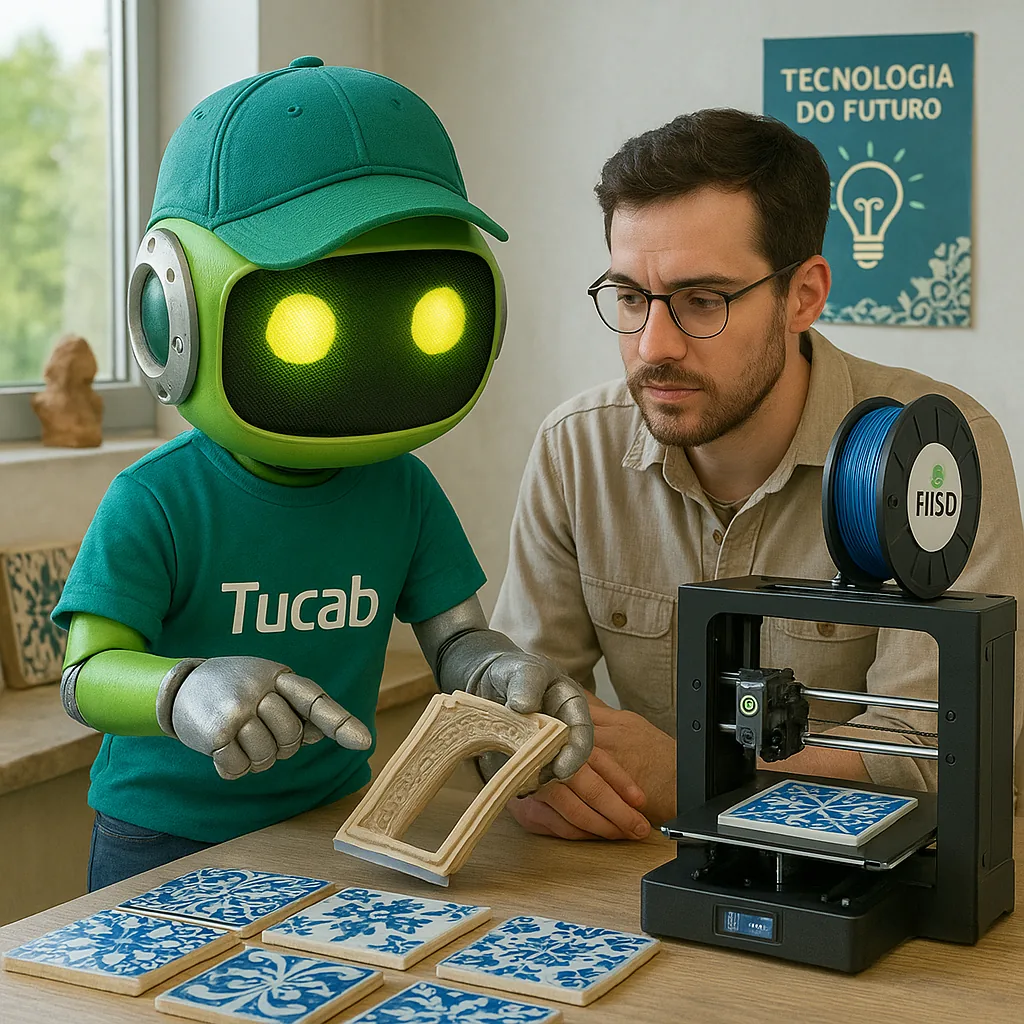
FDM 3D Printing in the Restoration of Cultural Heritage: How the Restorer Uses Technology to Preserve History with Tucab
Preserving the Past with Technology of the Future
The restoration of cultural heritage is an art that requires precision, patience and a deep respect for the history. Whether restoring an 18th century tile or recreating a decorative element from an old church, restorers have the mission of preserving the past for future generations. What if we told you that FDM 3D printing is helping with this task? With Tucab's FIL3D filaments, restorers are using the technology to recreate pieces, protect originals and even teach others about history. Let's discover how this innovation is transforming the daily lives of these professionals!
How FDM 3D Printing is Transforming Heritage Restoration
FDM 3D printing allows you to create three-dimensional objects layer by layer, using filaments such as Tucab's FIL3D PLA. For restorers, this technology is a powerful ally. Here's how they use it:
- Recreation of Damaged Pieces:
Often, heritage elements, such as a statue or an ornament, are damaged or incomplete. With 3D printing, the restorer can scan the original part, create a 3D model and print an exact replica with FIL3D filament. For example, a restorer can recreate a flower from a historic tile, using blue and white FIL3D, to replace a lost piece.
- Prototyping for Testing:
Before applying a restoration technique directly to an original piece, the restorer can use FDM to test methods. Imagine you are restoring a baroque chandelier: you can print a replica with gold FIL3D, test different paints or glues and ensure that the process does not damage the original.
- Educational Replicas:
Museums and schools often need replicas for exhibitions or educational activities. With FDM 3D printing, the restorer can create copies of artifacts, such as a fragment of Roman pottery, using FIL3D filaments in earthy tones, allowing visitors or students to touch and learn without risking the original.
- Restoration Sustainability:
Tucab's FIL3D PLA filaments are made from biodegradable and recycled materials, meaning that restorers can work in a more sustainable way, aligning heritage preservation with environmental protection.
- Documentation and Archive:
3D printing allows you to create physical models of pieces for archiving, ensuring that, even if the original deteriorates, there is an accurate replica for future reference.
A Day in the Life of a Heritage Restorer Cultural
Meet Miguel, a cultural heritage restorer who works in a studio in Sintra, specializing in historic tiles. Today, Miguel is working on restoring a tile panel from a 17th century chapel, which is missing several pieces with floral motifs.
In the morning, Miguel uses a 3D scanner to scan an intact tile with a flower pattern. Based on this scan, you create a 3D model in software like Blender and adjust the design to recreate the missing parts. Choose Tucab's blue and white FIL3D filament to match the original tones and print the missing flowers on your FDM 3D printer. While the machine works, Miguel prepares the original tiles, cleaning them carefully.
In the afternoon, Miguel tests the integration of the printed pieces into the panel. The flowers printed with FIL3D fit perfectly, and he uses them as a mold to create a final ceramic piece, preserving the authenticity of the panel. Before the day ends, print a replica of the complete panel with white FIL3D filament, which will be used in an educational exhibition at the local museum.
The Benefits That Make a Difference
- Accuracy: FDM 3D printing allows you to recreate minute details, like the patterns on a tile, with accuracy.
- Preservation: Replicas printed with FIL3D protect the original parts, reducing the risk of damage.
- Sustainability: Recycled FIL3D filaments help reduce the environmental impact of restoration work.
- Education: Printed replicas allow more people to interact with heritage in a safe and educational way.
The Future of Heritage Restoration with FDM 3D Printing
The future of cultural heritage restoration is exciting! With the advancement of filaments, such as Tucab's FIL3D, we may see even more specialized materials, such as filaments that imitate the texture of ceramic or stone, perfect for realistic replicas. Additionally, 3D printing can be used to create custom tools for restorers, such as specific supports or molds.
Imagine a day when museums have “3D printing stations” where visitors can print a take-home replica of an artifact, made with FIL3D, while learning about its history. Or restoration ateliers that use FDM to recreate entire facades of historic buildings, preserving heritage in an innovative way.
Preserve the Past with Tucab!
FDM 3D printing is opening up new possibilities for cultural heritage restorers, allowing them to combine tradition with innovation. With Tucab's FIL3D filaments, these professionals can recreate, protect and share history in a sustainable and accurate way. Do you want to know more about the impact of 3D printing on other professions?
Explore our articles on sustainable fashion and sculpture!
And you, what do you think of this fusion between history and technology? Share your opinion in the comments!
#Tucab #3D Printing #Cultural Heritage #FIL3D