
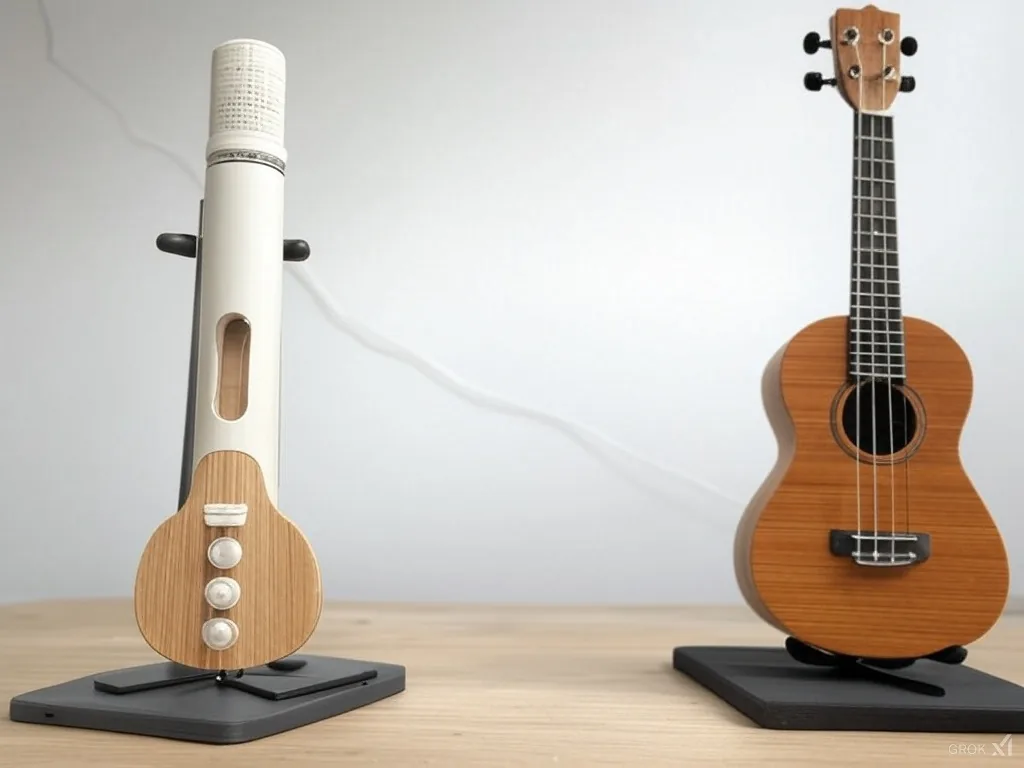
- PLA (Polylactic Acid): A biodegradable material, easy to work with, with good printing quality. Ideal for light instruments where rigidity is not critical. heat resistant than PLA, offering a good option for instruments that require more robustness. Styrene Butadiene): Known for its durability and impact resistance, although it requires a controlled environment for printing due to the release of fumes. r-16dba41">Composites with Natural Fibers: Filaments that incorporate fibers from wood, bamboo, or other natural materials for more traditional acoustics and an aesthetic finish.
- Custom Flute: An amateur musician used our filaments to print a transverse flute with ergonomics adapted to his left hand, which suffered an injury. The flute was designed to be lighter and with finger holes positioned for easier reaching, resulting in an instrument that was not only more comfortable to play but also had a clear, crisp sound. r-rjixqe r-16dba41">Children's Ukulele: A music school in Portugal used our filaments to create ukuleles in smaller sizes, adjusted for children's hands. These ukuleles are designed to be tough yet lightweight, with vibrant colors printed directly onto the filament, encouraging children's interest in music from an early age. r-16dba41">Cello Soundbox: A luthier experimented with our filaments to print an additional soundboard for a cello, which could be attached to the instrument to alter its sound projection during outdoor performances. This accessory allowed the musician to adjust the acoustics of his cello for different environments without modifying the original instrument.
- Modifiable tambourine: A percussionist created a tambourine with 3D printed interchangeable parts, using our filaments. He was able to experiment with different jingle patterns and frame sizes, customizing the sound and feel of playing, something that would have been impractical with traditional manufacturing methods. r-16dba41">Compact Accordion: An accordion enthusiast has developed a compact and lightweight model using our filaments, ideal for travel. This accordion maintained its sound quality, but with a design that made it easy to transport, showing how 3D printing can adapt instruments to different lifestyles. r-b88u0q">Examples of Musical Accessories That Can Be Printed:
- Instrument Covers: Lightweight, customized covers to protect instruments during transport, with specific compartments for accessories. r-16dba41">Plectrums and Drumsticks: Plectrums with different shapes and textures for guitarists, or drumsticks with adjustable weights and interchangeable tips for drummers.
- Stands and Pedestals: Custom stands for instruments, such as violins or flutes, that can be adjusted to the musician's height and posture.
- Violin Reeds: Reeds printed with different materials to vary the sound and response when playing.
- Visual Tuners: Tuning devices that can be attached to instruments, with printed LED displays that show real-time tuning.
If you are interested in exploring this new frontier of music with our filaments, please visit us at tucab.pt or get in touch to find out more.
#Tucab #3D Filament #Musical Instruments #Personalization #Innovation #Music #Sustainability #Acoustics #Musical Accessories #Portugal