
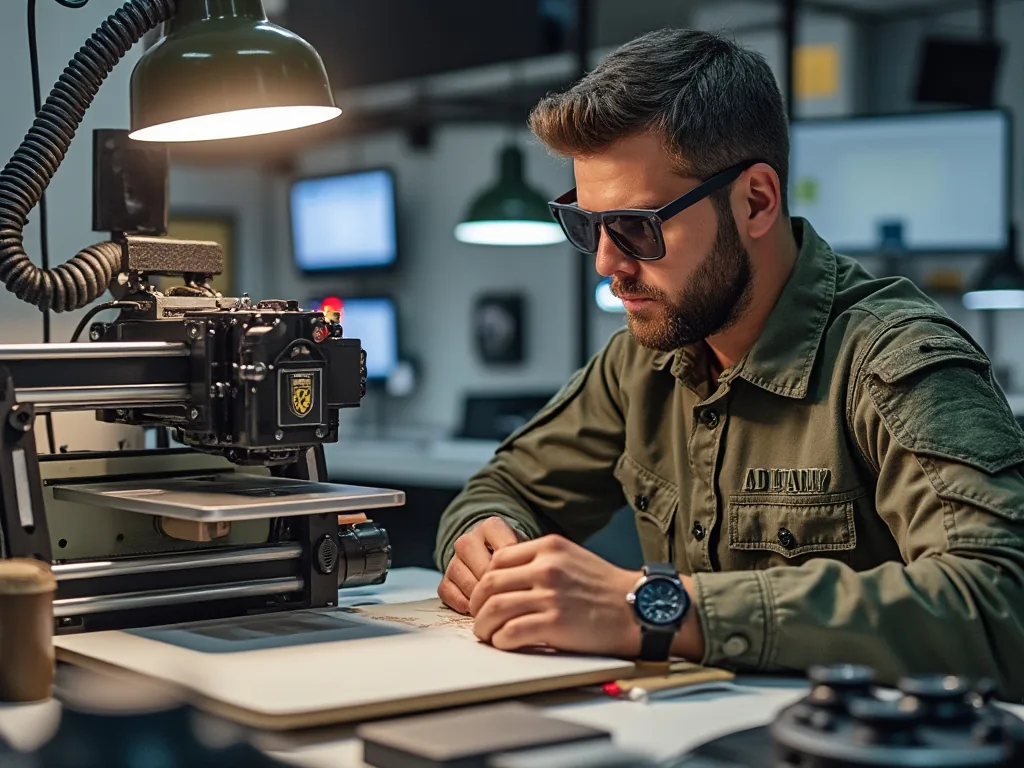
3D Printing: An Innovative Ally in War Scenarios
3D printing has revolutionized conflict situations, bringing quick and innovative solutions to logistical and humanitarian challenges. Check out examples and curiosities:Equipment Production on Demand
In conflict zones, 3D printers quickly produce parts such as:Custom drones: used for surveillance and light supply delivery.Military vehicle parts: local repairs of tanks and trucks.Specific tools: wrenches, brackets, and parts for medical equipment.Example: During the war in Ukraine, parts for drones were printed to replace damaged components, helping to monitor terrain and carry out delivery missions.Reduced Cost and Logistics
In remote locations, transporting essential parts is expensive and time-consuming. 3D printing simplifies this.Example: Soldiers at isolated bases print tools and prototypes directly on site, saving weeks of waiting for transport.Medical Applications
The technology also stands out in prosthetics and emergency medical equipment.Prosthetics for war victims: Affordable and patient-friendly.Surgical tools: Produced quickly for doctors in conflict zones.Example: In South Sudan, 3D-printed prosthetics have significantly reduced costs and manufacturing time for people with amputated limbs.Temporary Shelter Construction
Large-scale printers create basic structures to house displaced civilians.Example: Refugees in Syria received shelters built with 3D printers, reducing construction costs and speeding up installation.Materials Used:
PLA and ABS: Ideal for prototypes and lightweight parts.Reinforced nylon: For greater resistance.Metal composites: Production of critical parts in equipment heavy.Technology at the service of humanity
3D printing combines innovation and necessity, providing solutions that save lives and optimize resources even in adverse scenarios.#Fil3D #Technology #3D Printing #War #InnovativeSolutions #3dprinting