
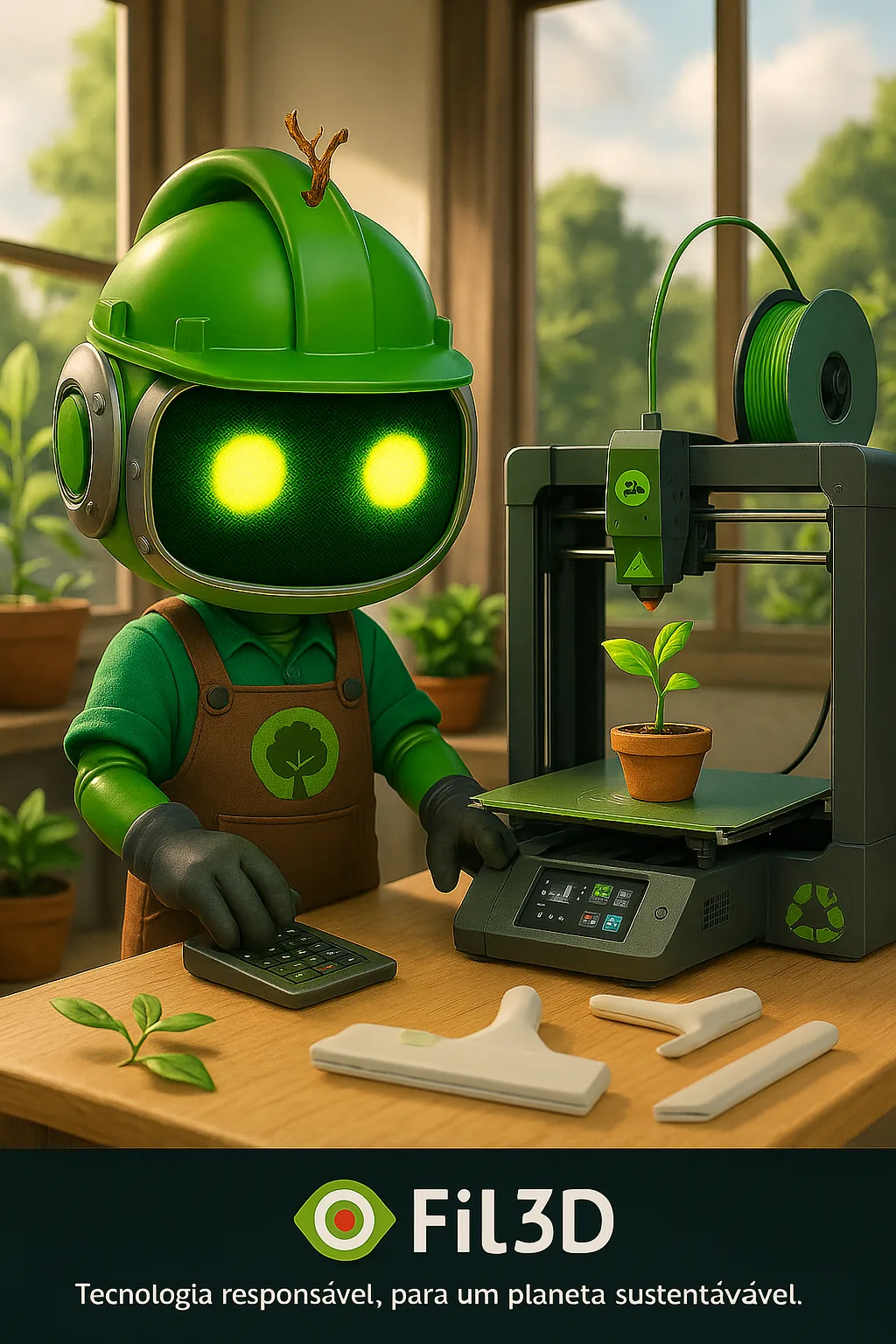
3D Printing and Environmentalism: Sustainable Solutions Layer by Layer
In the past, plastic was the villain. Today, with responsibility and innovation, you can become part of the solution. 3D printing is gaining a prominent place in the fight for a more sustainable planet. By allowing tailored, local production using recycled or biodegradable materials, this technology offers environmentalists a new practical, educational and ecological tool.
1. Theoretical Foundations: Why is 3D printing sustainable?
3D printing is based on principles of the circular economy and decentralized production, such as:
-
On-demand production: no surplus, no storage, no waste;
-
Reduced transport and packaging: the pieces are produced locally;
-
Functional customization: each piece can be adapted to the local environmental reality;
-
Ecological filaments: such as PLA (biodegradable) or recycled PETG, which reduce the impact of origin.
In addition, it is a low energy consumption technology when compared to traditional industrial methods.
2. Practical Examples for Environmentalists
a) Activism and environmental education
-
Printing ecosystem models for schools and communities;
-
Creation of educational games with an environmental theme (recycling, biodiversity, water);
-
Keychains or event giveaways with directly printed ecological messages.
b) Sustainable DIY solutions
-
Supports for portable solar panels;
-
Structures for vertical gardens or hydroponics systems;
-
Supports for environmental sensors (water quality, soil humidity, etc.) urban;
-
Printed tools for community repair workshops (“repair cafés”).
3. A Vision of the Future: 3D printing as an ally of ecological transition
The future involves:
-
Biologically based filaments (made from organic waste, algae, vegetable fibers);
-
Domestic collection and re-extrusion systems, which allow plastic waste to be transformed into filament;
-
Printers powered by solar panels or installed in ecovillages and off-grid projects;
-
Production of tailor-made parts for renewable energy solutions, such as home wind turbines;
-
Use of 3D printing in rapid responses to environmental disasters (for example, printing adapters for water filters, parts for temporary shelters or emergency signage).
Fil3D as an agent of change
At Fil3D, we believe that:
-
technology can be an ally of the environment;
-
innovation should not be incompatible with respect for the planet;
-
conscious printing is a new form of ecological activism.
That's why we develop and promote recycled, compostable and highly durable filaments, for those who want to do more — with less impact.
Conclusion
3D printing puts a tool for transformation in the hands of environmentalists. Whether in the forest, in the city, in a school or in a garage, it is possible to print solutions for a better world.
Fil3D – Responsible technology for a sustainable planet.