
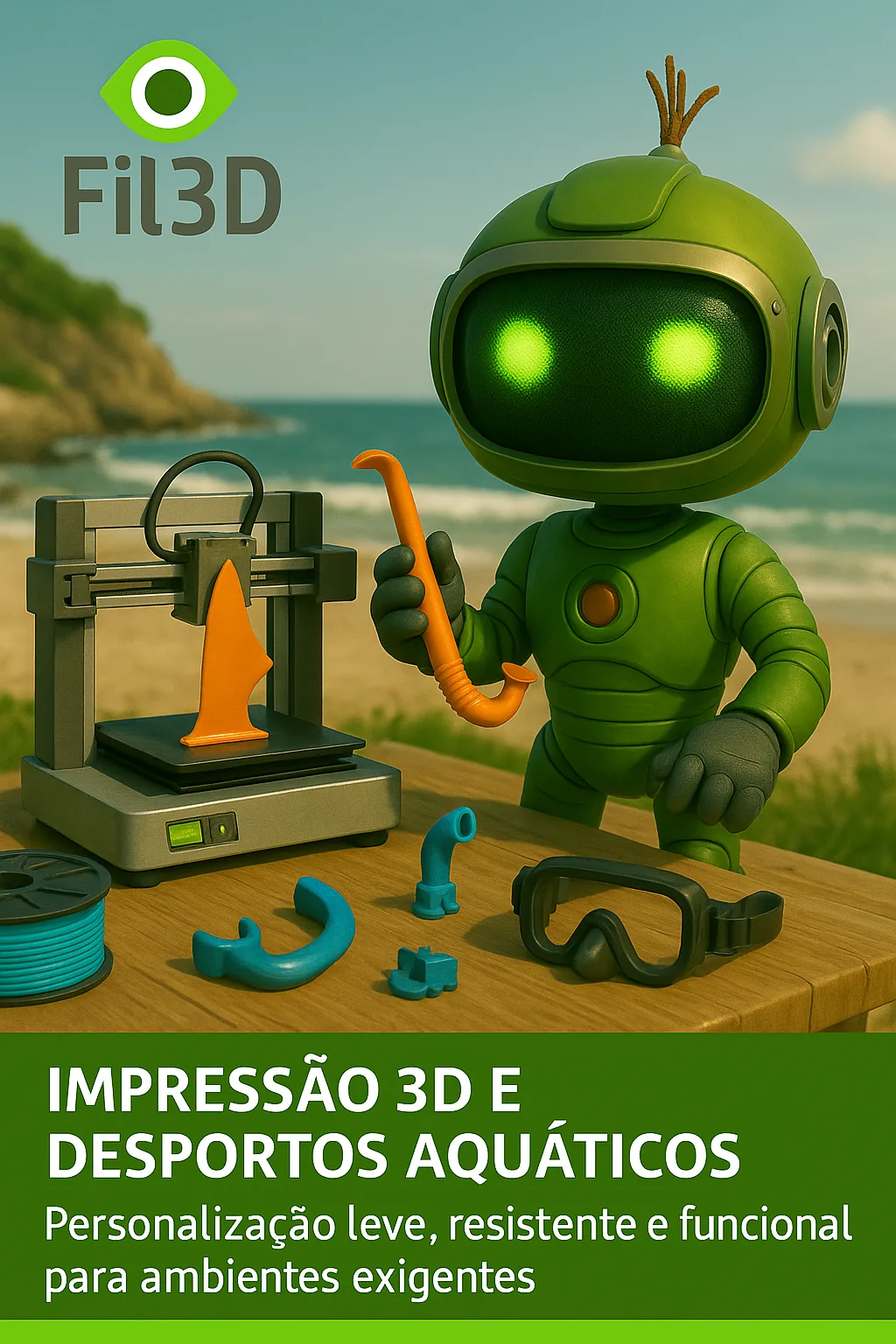
3D Printing and Water Sports:
Functionality in Demanding Environments
3D printing is diving into new applications, literally. In the world of water sports — such as swimming, surfing, diving, sailing or kayaking — 3D printed components offer lightweight, water-resistant and highly customizable solutions.
Where 3D Printing is already making waves:
Surfing and bodyboarding:
-
Custom fins with different geometries
-
Full-size board prototypes (for molds)
-
Connection pieces between deck and accessories
Swimming:
-
Nose clip, earmuffs and ergonomic supports
-
Custom training sensor brackets
-
Printing parts for technical training equipment (e.g. snorkels, paddles)
Diving:
-
Mounts for GoPro and adaptable flashlights
-
Custom bases and connectors for masks and tubes
-
Maintenance components for equipment underwater
Sailing and canoeing:
-
Spare parts for fastening and anchoring
-
Cable adapters, fittings and adjustment knobs
-
Technical floats for instruments or electronic devices
Recommended materials:
-
PETG – Excellent resistance to moisture and durability
-
ABS – Good rigidity and impact resistance
-
PLA – Good option for prototypes and moderate use in outdoor environments
-
Fil2ndLife – Ecological and functional solution for non-critical applications
Advantages for athletes and coaches:
-
Total customization to the body or equipment
-
Rapid production of custom-made parts
-
Reduction in costs for replacement or training parts
-
Rapid prototyping for new aquatic designs
Conclusion:
3D printing is already an ally of athletes and coaches.
With Fil3D filaments, it is possible to go further, in and out of the water — always with lightness, precision and layer-by-layer innovation.