
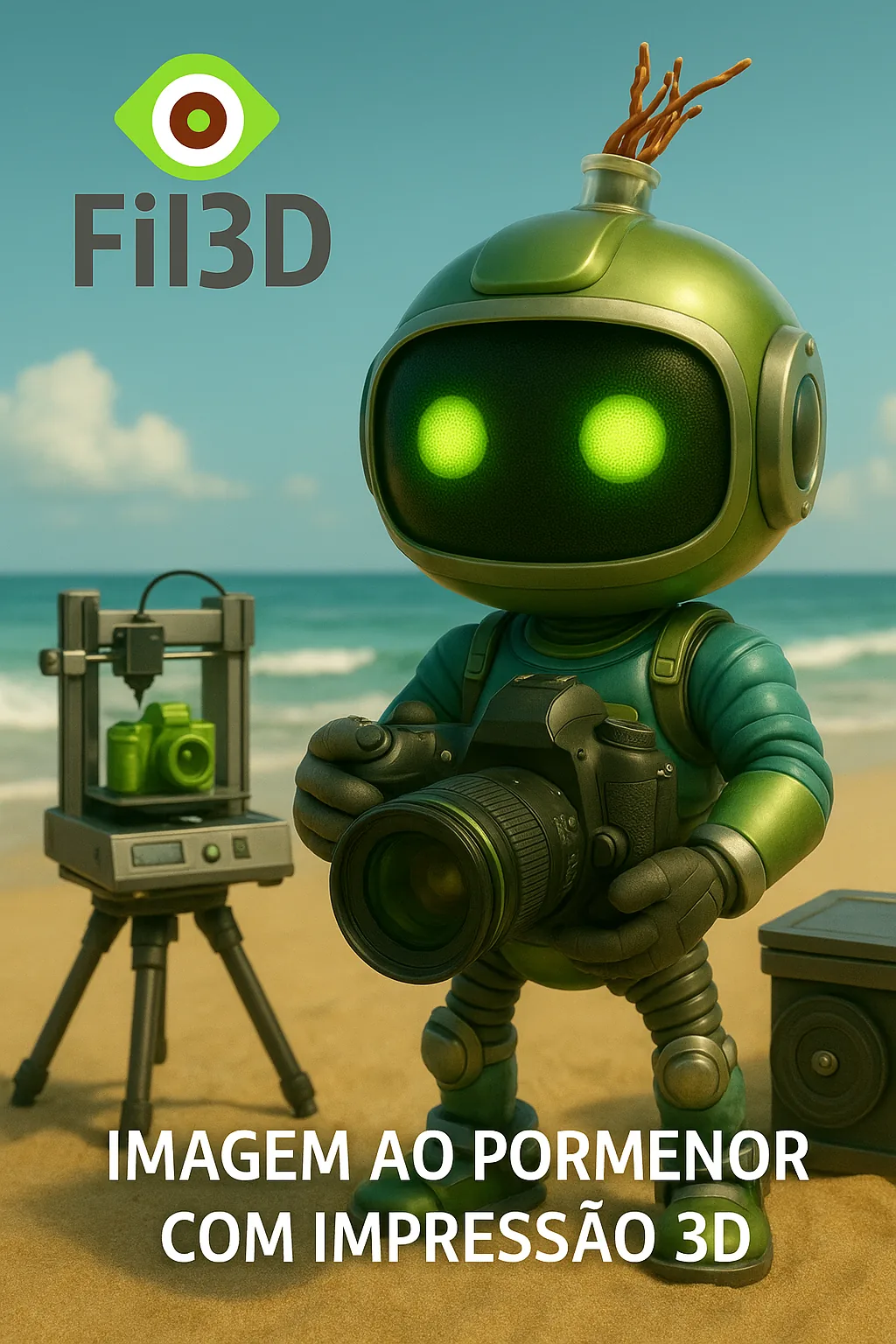
3D Printing in Professional Photography: Precision, Creativity and Autonomy
In the imaging era, professional photography has become increasingly demanding — not just in capturing, but in preparing, assembling and transporting equipment. 3D printing, especially with technical filaments such as PETG, PLA and recycled filaments such as Fil2ndLife, appears as a powerful tool in the hands of photographers, studios and visual content creators.
Real Applications of 3D Printing in Photography
Accessories custom:
-
Tiltable flash stands adapted to specific cameras or structures
-
1/4” and 3/8” thread adapters with reinforced geometries for weight and impact
-
Shoe extenders for mounting multiple devices (LED, microphone, external monitor)
Equipment modification:
-
Printed parts to change the shooting angle, LCD position or even the camera grip
-
Follow focus rings printed with texture for different lenses
-
Touch controls printed for external recording/video buttons
Organization and logistics:
-
Custom boxes for batteries, cables, SD cards, ND filters
-
Wall brackets or drawer for studios
-
Suitcase organizers that fit into foam cutouts with printed pieces
Important Technical Parameters:
| Parameter | Practical recommendations |
|---|---|
| Material | PETG for parts exposed to sun or impact; PLA for lightweight accessories |
| Padding | 30–40% for functional parts; 100% for load supports |
| Walls | ≥ 3 outer walls for tripod mounts or lens rings |
| Tolerances | Compensate ±0.2 mm on rigid fitting parts |
| Post-processing | Fine sanding + varnish for photographic aesthetics or soft-touch |
Sector Curiosities:
-
Fashion studios print custom-made frames, dividers and backdrop stands.
-
Nature photographers use 3D printing to adapt trap cameras, camouflage tubes or magnetic mounts for placement in remote locations.
-
Independent videographers use 3D printers to build stabilized camera rigs without the need to import expensive accessories.
On-demand solutions — example: an adapter for a new lens printed 30 minutes before the session
Extreme customization: printing of softboxes or diffusers with optimized structure and geometry, without depending on brands or suppliers
The trend is for photographers to stop adapting to the market and start creating tools unique — and that's what 3D printing offers: creative autonomy.
Conclusion
With 3D printing, professional photography is no longer limited by what exists on the market.
Each photographer is now able to design their own studio, with pieces created to suit their vision, their work and their equipment.
With Fil3D, this becomes possible — layer by layer, without limits.