
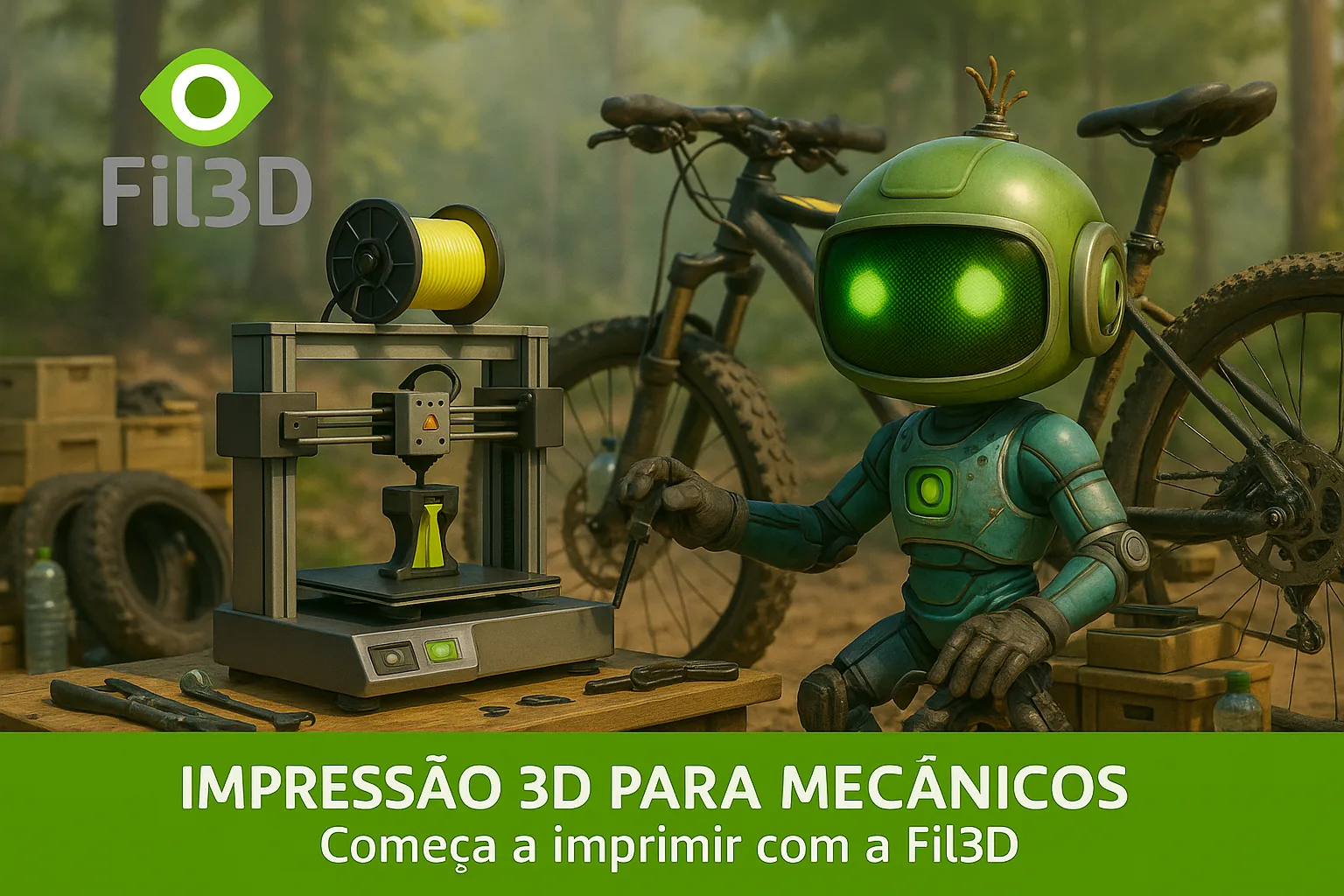
3D Printing in Bicycle Maintenance: The Revolution of Modern Mechanics
The profession of bicycle mechanic — whether road, mountain bike, urban or electric — is transforming with the arrival of 3D printing. Customized tools, hard-to-find components, improvised solutions and bespoke parts can now be printed in-house, with total control over shape, strength and aesthetics.
Practical applications of 3D printing in bicycle mechanics
Specialized tools:
-
Bearing pullers made tailored to the brand/model
-
Keys for bottom bracket brackets, cassette or non-standard hubs
-
Support shims for adjusting hydraulic brakes
Adapters and supports:
-
Spacers for handlebars, seat posts and gears
-
GPS, lighting or cell phone holders
-
Bench hooks to suspend the frame or wheel during repair
Replacement or prototype components:
-
Lids, plugs and aesthetic accessories in PLA
-
Provisional or test fitting parts (in Fil2ndLife)
-
Chain protectors, stops and shims printed in PETG with high resistance
Materials recommended:
| Material | Ideal application | Benefits |
|---|---|---|
| PETG | Exterior parts, fasteners, supports | UV resistance, impact and controlled bending |
| PLA | Internal tools, aesthetic prototypes | High detail, easy post-processing |
| Fil2ndLife | Experimental and interim solutions | Sustainable and functional for testing |
Real facts from the workshop:
-
Some mechanics print quick mounting brackets for frames on display or cleaning
-
Workshops specializing in competition bicycles use 3D printing to make molds for exclusive protections for carbon frames
-
In MTB races, there are already teams with portable printers to solve unexpected situations in the field
Future: customization and technical autonomy
With 3D printing, the mechanic no longer depends on the availability of parts on the market. You can design, test and produce unique solutions, adapted to each bike and each cyclist's style.
Conclusion:
The modern mechanic is also a creator — and 3D printing is his most versatile tool.
With Fil3D filaments, customization is real… layer by layer.