
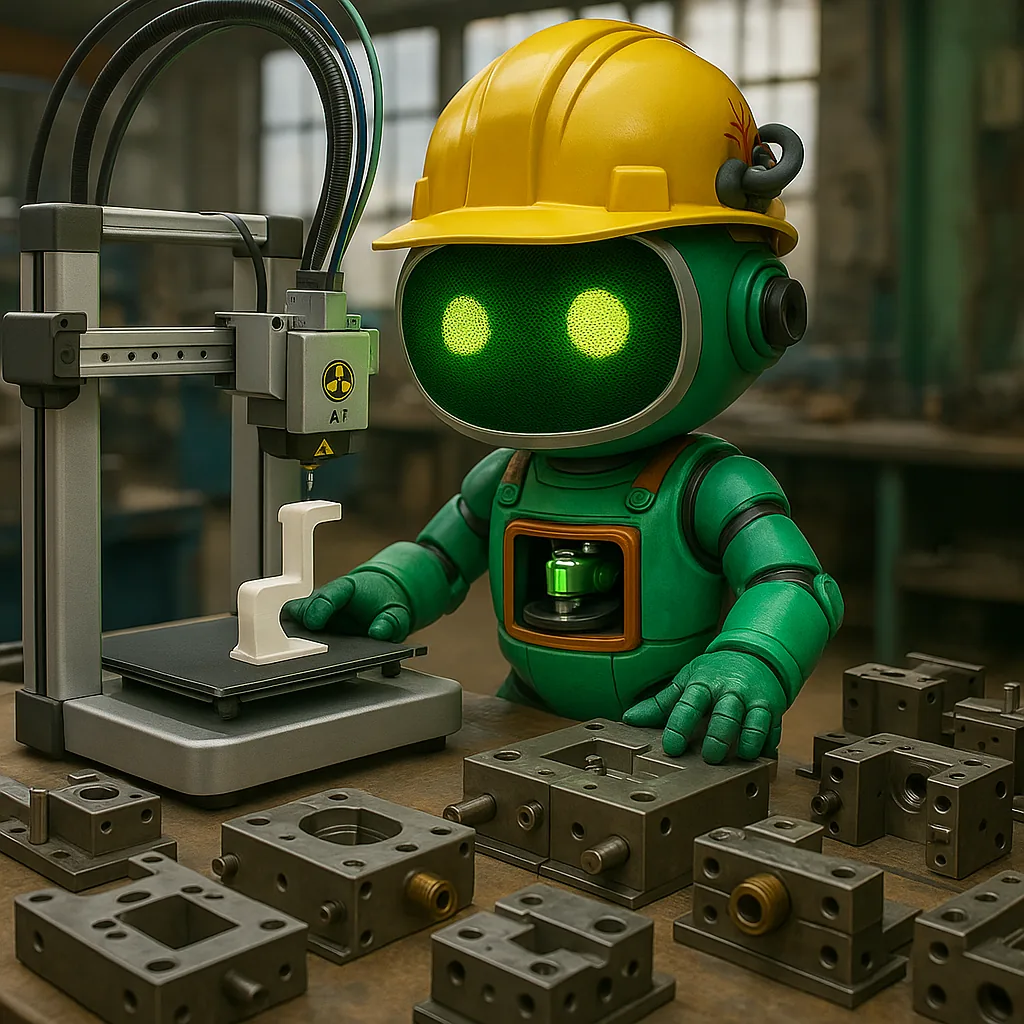
3D Printing in Injection Molding: Precision in Every Detail
Injection molding is one of the most used techniques in the manufacturing industry, being essential in the production of plastic parts with high precision, complexity and in large volumes. In this process, injection molding technicians play a vital role, ensuring the preparation, assembly, tuning and maintenance of molds and equipment.
With the growing need for customization, rapid prototyping and reduction of operational costs, 3D printing with Fil3D emerges as a powerful and complementary tool for this activity.
Examples Theoretical – Where 3D Printing Makes a Difference
-
Development of mold prototypes before investing in steel or aluminum;
-
Creation of temporary functional parts, such as covers or guides;
-
Positioning jigs to check geometries or fittings parts: PETG Fil3D a personalized wrench to tighten a hard-to-reach injection nozzle;
-
In an emergency scenario, prints a locking part to correctly align two mold halves;
-
Uses 3D printing to create an exact replica of a rejected part, facilitating defect analysis with the customer or project team;
-
In preventive maintenance, prints protective covers for sensors or exposed wiring.
Vision of the Future – The Injection Technician of Tomorrow
With the evolution of industry 4.0, 3D printing tends to be increasingly integrated into technicians' jobs:
-
3D printers available next to each production line to react immediately to technical needs;
-
Integration of sensors in printed templates, communicating with the factory's MES system;
-
Direct printing of customized cooling channels for thermal tests in molds;
-
Materials with new properties (conductive, flexible, anti-static) will allow the replacement of technical parts with improved performance.
Why Choose Fil3D?
-
Dimensional accuracy guaranteed by laser control throughout the process;
-
Recycled materials in line Fil2ndLife, with environmental commitment;
-
Made in Portugal, with resistant reels and sustainable packaging;
-
Compatible with the most demanding printers, such as Bambu Lab, Prusa, Creality or Anycubic.