
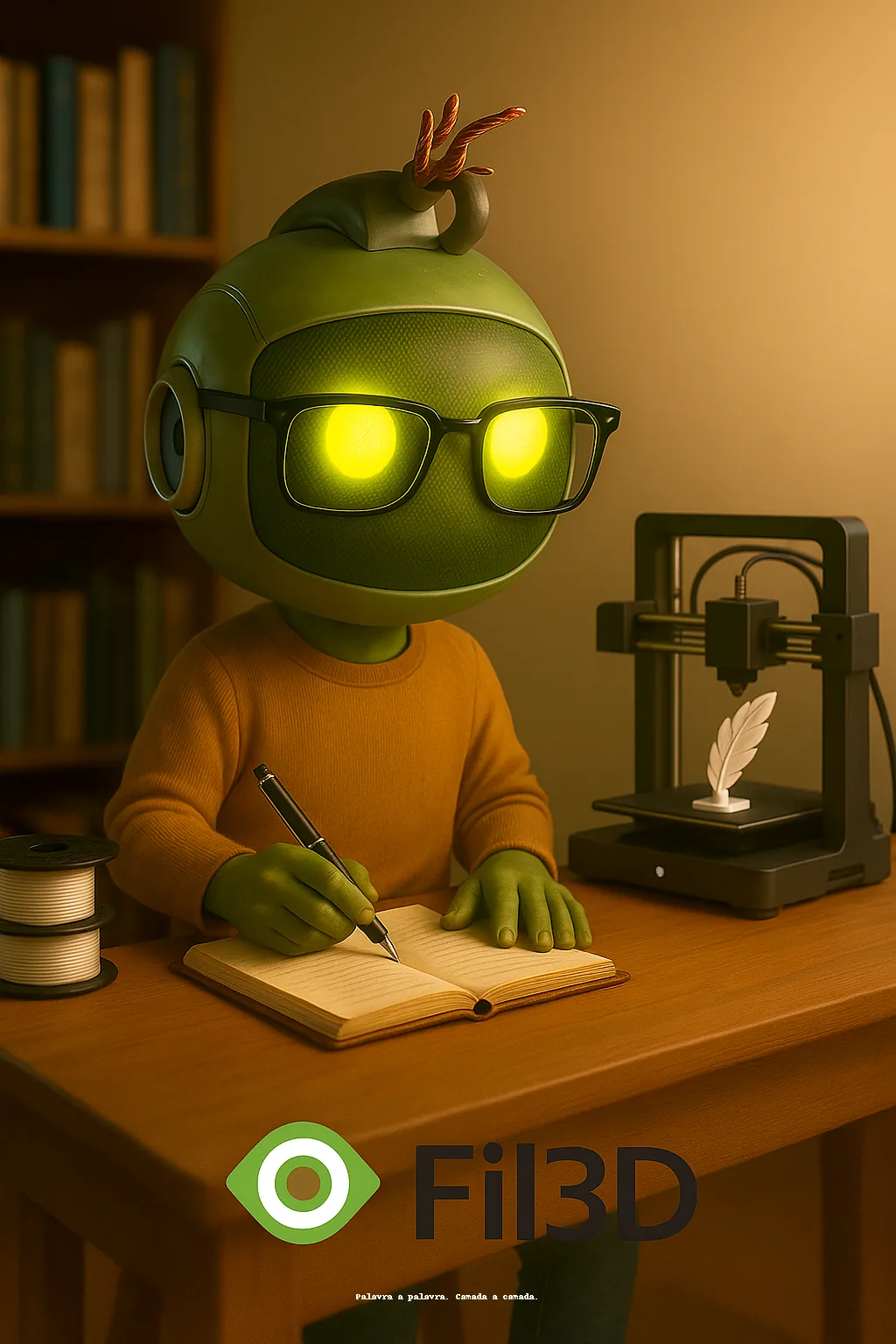
3D printing in the Writing profession: giving shape to words
Writing has always been an intangible art — made of ideas, mental images and words on paper. But with the advancement of 3D printing, writers of today and tomorrow can literally build their worlds, transform characters into tangible figures and create objects that enrich the imagination of readers.
In the era of expanded narrative, 3D printing appears as a natural extension of the creative process.
Current applications of 3D printing in the world universe of writing
1. Character Prototyping
A fantasy or science fiction writer can use 3D modeling software (like Blender or ZBrush) to bring their characters to life. These figures can be printed with detailed, high-definition PLA and used:
-
as constant visual inspiration during writing;
-
as limited edition gifts for supporting readers;
-
as illustration element in book promotion or cover.
2. Models of worlds and settings
Authors can draw miniatures of cities, castles, islands or planetary systems that appear in their stories, printed with PETG or PLA and painted by hand, helping to maintain geographic coherence and stimulating creativity.
3. Tangible narrative objects
Magic keys, ancient coins, coats of arms, alien artifacts or any item described in the text can come to life as a 3D object. These are ideal for:
-
author merchandising;
-
social media promotions;
-
special collector's editions;
-
exhibitions at literary events.
4. Innovative editorial design
3D printing allows you to create:
-
covers with embossed elements;
-
3D logos and letters for hard covers;
-
personalized page markers;
-
stands and displays for books (in stores or fairs).
5. Collaborative writing in an educational environment
Literary workshops for young people or schools can use 3D printing as a visual storytelling tool: a set of objects are printed and participants build a story around them. It's playful, inclusive and ideal for awakening a love of writing.
And in the future?
1. Interactive 3D books
2. Custom printing at the point of sale
3. Printing of talking books with objects for the blind
4. Augmented reality and 3D printing combined
Fil3D filaments ideal for writers:
| Material | Application |
|---|---|
| PLA | Quick parts and visual prototypes |
| PLA | High quality miniatures and details |
| PETG | Sturdy pieces, displays, stands |
| ABS | Technical gifts and robust |
| Fil2ndLife | Creative workshops, collaborative writing |
Writing is creating. Printing is giving life.
In Fil3D, writers find not only materials, but new forms of expression. Because the future of stories won't just be read — it will also be played.