
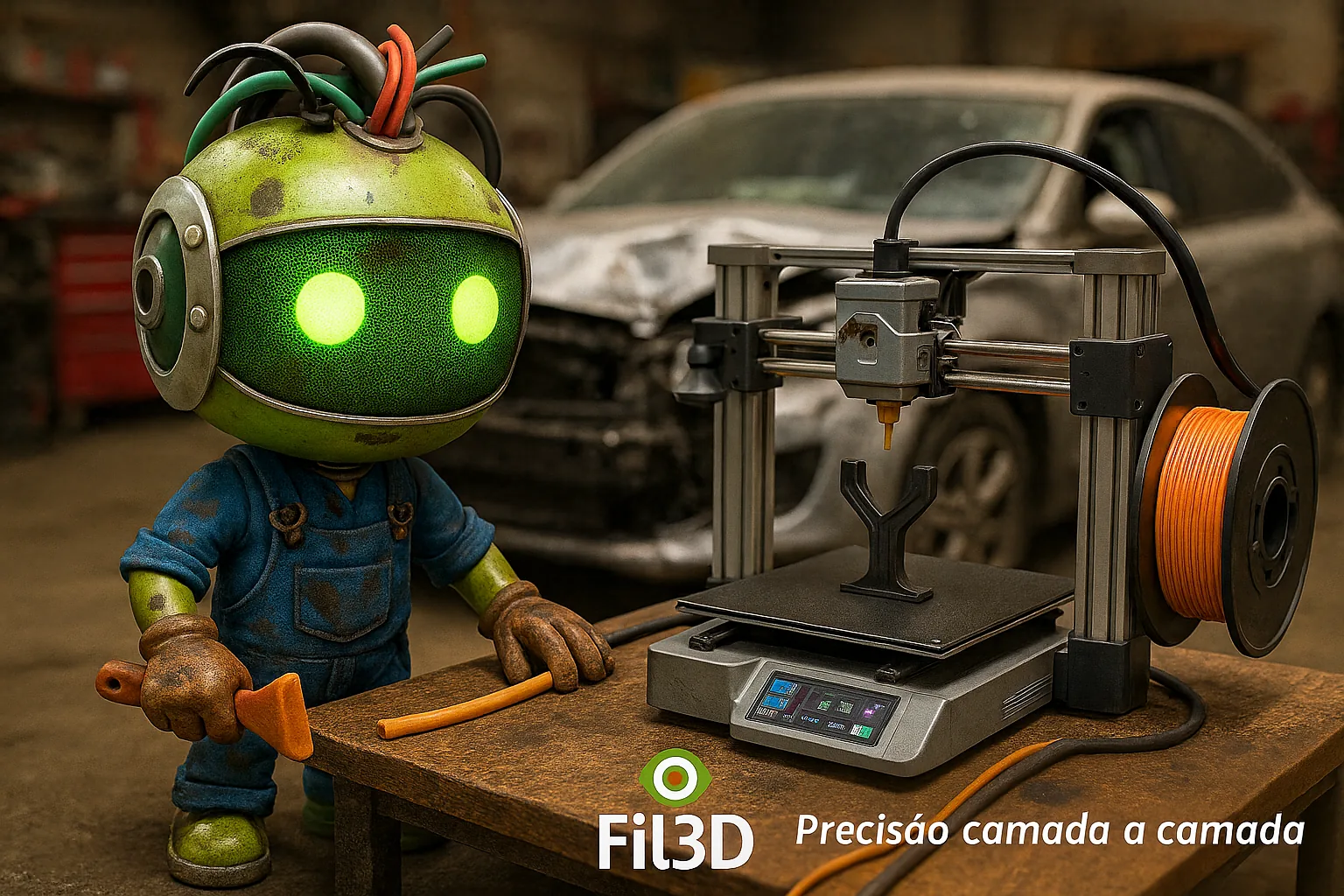
3D Printing in Workshops: Precision, Efficiency and Creativity at the Service of the Automobile
3D printing is gaining prominence in automotive repair shops.
Mechanics, mechanics and painters are discovering new ways to improve the efficiency of their work with customized tools and parts, produced locally, without depending on external suppliers.
What can be printed in a workshop?
-
Alignment templates for panels, optics and headlights
-
Temporary supports for mounting or dismounting components
-
Paint masks adapted to areas with curves or technical details
-
Adapters and fittings for hoses, tubes or tools
-
Molds and patterns for finishing, testing and dimensional verification
Actual examples
-
A sheet metal cutter prints a front grille bracket to align correctly before welding;
-
A painter prints a precision mask to delimit a specific paint application zone on a complex part;
-
A mechanic prints an adapter to attach a compressor during the repair of an A/C system.
Why 3D printing makes sense in workshop?
Personalized production with 3D printing allows:
-
Greater technical autonomy to solve unique problems;
-
Cost reduction with spare parts or external jigs;
-
Execution speed, without dependence on orders or delivery times;
-
Sustainability, with less waste and less transportation of parts;
In addition, it promotes technical creativity and the professional development of the workshop.
Recommended filaments
-
PETG – Impact and temperature resistant, ideal for technical use
-
ABS – For parts exposed to heat or subject to mechanical stress
-
PLA – For prototypes, jigs and molds with dimensional accuracy
With Fil3D, automotive professionals gain autonomy, precision and creativity — layer by layer, part by part.