
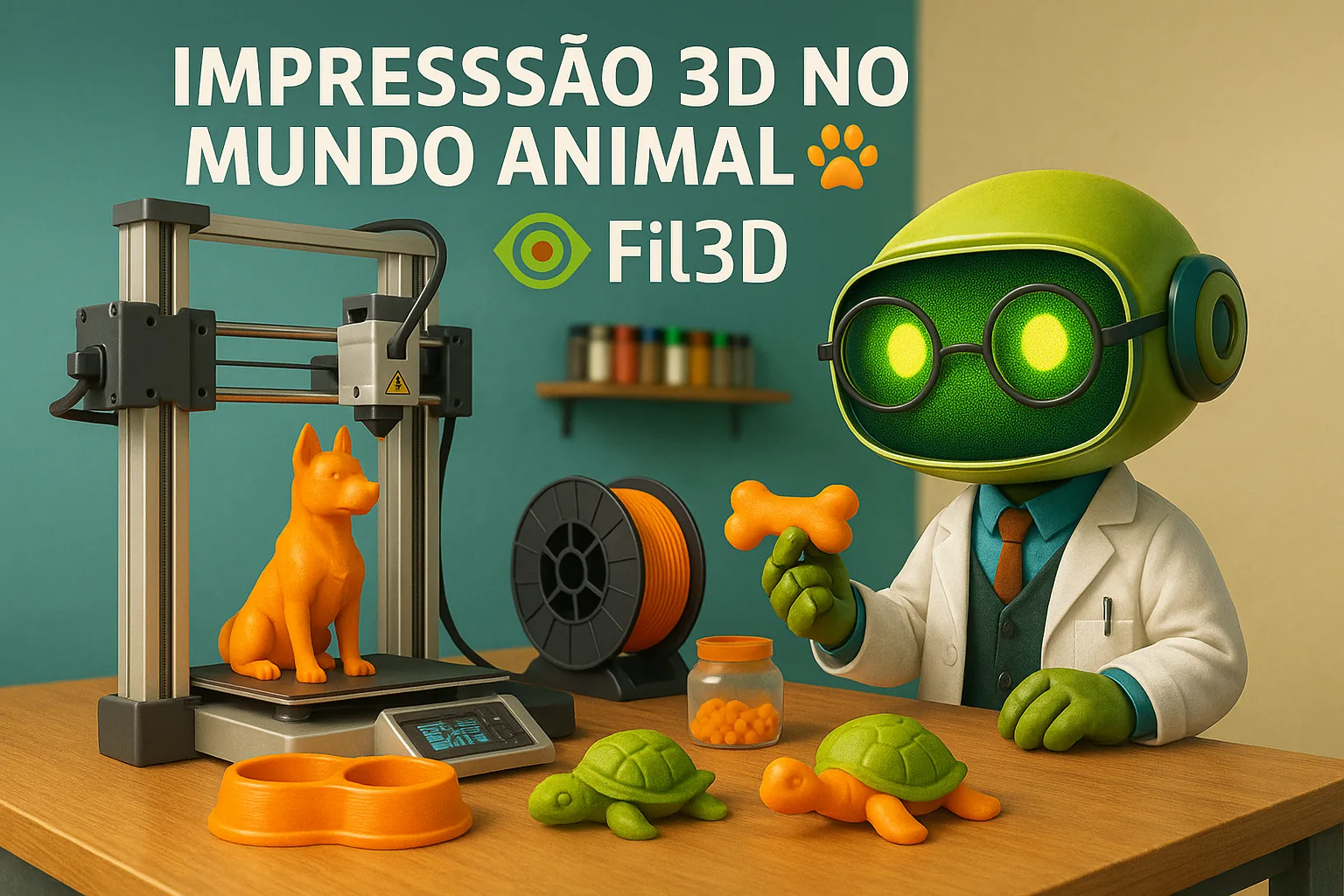
3D printing has shown that it is not just a technology for industry or education — it can also improve the quality of life of animals.
From prosthetics that restore mobility to practical accessories for everyday life, 3D printing is becoming an ally for veterinarians, caregivers and animal owners.
Practical applications of 3D printing in animals
Prosthetics and custom orthoses
-
Creation of prosthetics adapted for dogs and cats that have lost limbs.
-
Lightweight orthoses to help animals with mobility problems.
Each piece is custom-made, ensuring comfort and mobility.
Supporting wildlife
-
Printing bird beaks to replace those broken in accidents.
-
Support structures for turtle shells.
Small interventions that save lives.
Personalized accessories
-
Feeders and drinkers adapted to animals with specific needs.
-
Sturdy and creative toys made from 3D filament.
-
Supports and adapters for collars, leashes and carriers.
Aquariums
-
Aquarium decorations and structures made from safe materials.
-
Printing artificial reefs for marine conservation.
Advantages
-
Total customization → each solution is made for that specific animal.
-
Cost reduction → 3D prosthetics can be 10x cheaper than traditional ones.
-
Quickness → in a few hours it is done possible to give the animal a new life.
-
Sustainability → with the use of recycled filaments such as FIL2NDLIFE.
Curiosities
-
In 2015, a Brazilian toucan received the first 3D printed beak after a accident.
-
Veterinary universities already teach students how to use 3D printing in animal surgery and rehabilitation.
-
There are online communities dedicated just to creating 3D models for animal accessories.
The Future
-
Veterinary clinics will be able to have 3D printers in their offices.
-
New biocompatible materials will allow even more comfort and safety.
-
3D printing can help conservation programs for species at risk.
Conclusion
3D printing is showing that it can also be a transformative force in animal care, offering fast, affordable and sustainable solutions.
At FIL3D, we develop the filaments that help create that future, where technology is at the service of our four-legged companions — and beyond.
Discover more at: tucab.pt