
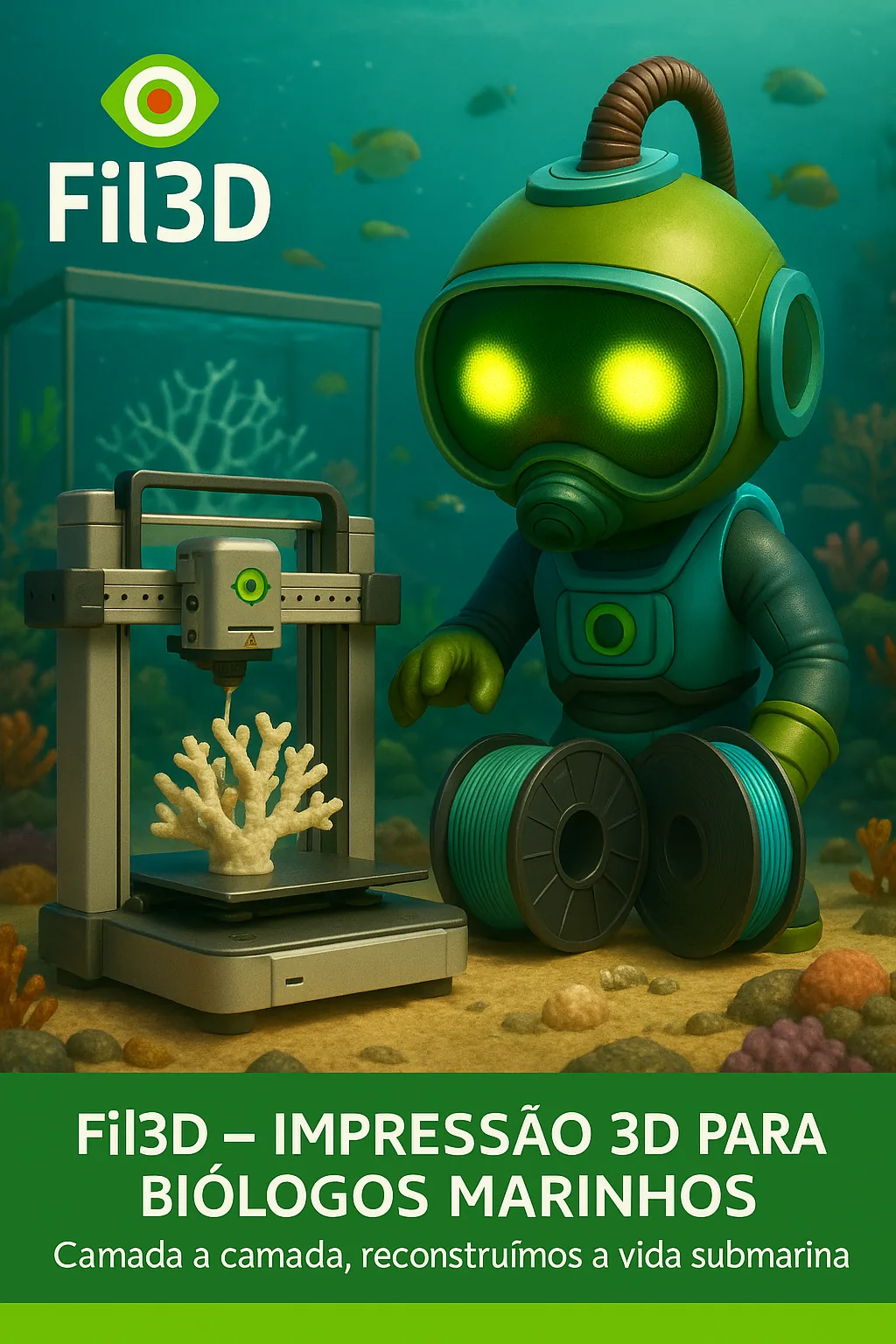
3D Printing for Marine Biologists: Creating Corals to Save Oceans
Introduction:
Practical applications of 3D printing in marine biology:
-
Printing coral models in PLA or PETG for reintroduction into degraded reefs;
-
Habitat simulation to study species behavior;
-
Development of support structures for growing live corals in the laboratory;
-
Printing environmental monitoring devices adapted to different marine species.
Advantages of Fil3D filaments:
-
High geometric precision, ideal for replicate complex shapes like coral branches;
-
Controlled durability, allowing temporary applications in aquatic environments;
-
Versatility of materials with resistance to humidity and salinity (PETG, PLA);
-
Fil2ndLife line, made from recycled material — perfect for environmental projects.
Practical example:
Conclusion: