
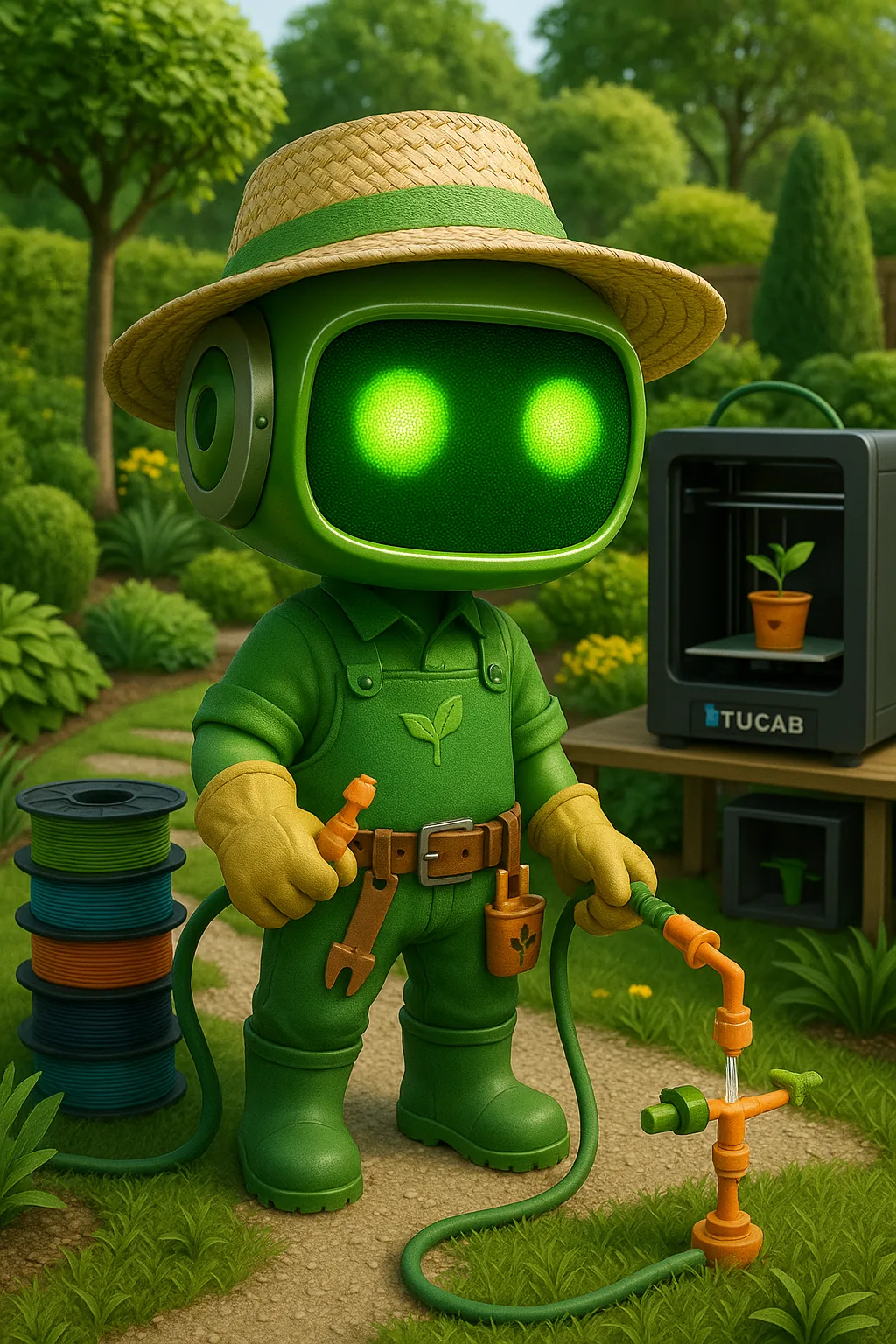
Tucabito in the Garden: How 3D Printing and FIL3D Are Revolutionizing the Work of Gardeners and Landscapers
3D printing, often associated with high-tech industries, is finding a new space in professions more linked to nature, such as gardening and landscape architecture. With FIL3D filaments, gardeners and landscape architects are discovering innovative ways to customize projects, reduce waste and increase everyday efficiency. In this article, we explore how FDM 3D printing, using FIL3D filaments, is transforming the work of these professionals, bringing creativity and sustainability to the heart of gardens.
Practical Applications of 3D Printing for Gardeners and Landscapers
FDM 3D printing technology, combined with FIL3D filaments, offers a wide range of practical possibilities for those working with gardens and landscaping. Here are some applications that are changing the routine of these professionals:
- Prototyping of Personalized Pots and Supports
Gardeners can use FIL3D PLA, available in colors such as green or with a wood finish, to create custom-made pots that adapt perfectly to customer projects. For example, a 15 cm tall vase with drainage holes can be printed in just 3 hours, using around 50 g of FIL3D PLA, at an approximate cost of €2.50. This is particularly useful for vertical gardens, where modular pots with specific designs save space and add a unique touch.
- Customized Tools and Accessories
With FIL3D PETG, which is more resistant to sun exposure and humidity, it is possible to print personalized hose holders, clips for climbing plants or even stakes. A 5 cm clip for attaching vines, for example, can be printed in 30 minutes at 230°C, with a layer height of 0.3 mm. Tests show that these clips withstand up to 20 kg of lateral pressure, ensuring durability in outdoor environments.
- Components for Irrigation Systems
3D printing allows you to create customized connectors for irrigation systems, such as T-connectors or hose adapters. Using black FIL3D PETG, a landscaper can print a connector with an internal diameter of 10 mm in less than 1 hour, optimizing the irrigation of a 20 m² garden. These components help organize hoses and ensure that water reaches exactly where it is needed, without waste.
Practical and Sustainable Benefits
The adoption of 3D printing with FIL3D in landscaping brings significant advantages, especially in a sector where sustainability is essential:
- Waste Reduction
Prototyping vases and supports directly with a 3D printer avoids the excessive use of traditional materials such as ceramics or molded plastic. Instead of buying ready-made pots that may not meet your exact needs, the professional prints only what you need, minimizing leftovers.
- Customization Without Limits
Each landscaping project is unique, and 3D printing allows you to create specific solutions, such as plant supports in shapes that complement the garden design. A gardener can, for example, print a series of curved supports for a trellis, adjusting the design in modeling software until it reaches the ideal shape.
- Efficiency and Savings
3D printing with FIL3D reduces costs and time. A vase that would cost €10 in a store can be printed for less than €3, and the professional does not need to wait for parts to be delivered. Furthermore, adjustments can be made quickly — if a support doesn't fit perfectly, simply modify the digital file and reprint.
Practical Example in Everyday Life
Imagine a landscape architect designing a vertical garden for a client in a small urban space. He uses Tinkercad software to model a system of modular vessels with 2 mm fittings, which he prints with green FIL3D PLA. Each vase takes 2 hours to print and uses 40 g of filament, totaling €2 per piece. For the irrigation system, it prints T-connectors with FIL3D PETG, ensuring that the hoses distribute water evenly. The project, which would take days to execute using traditional methods, is completed in 12 hours, with a material cost of just €10 — a significant saving compared to the €30 that would have been spent buying ready-made pots and connectors.
Conclusion: A Greener Future with 3D Printing
3D printing with FIL3D filaments is enabling gardeners and landscape architects take your projects to a new level of creativity, efficiency and sustainability. From personalized vases to custom-made tools, this technology offers practical solutions that align with the demands of a sector increasingly focused on innovation and environmental responsibility. Want to transform your gardening projects? Visit our dedicated FIL3D page and discover how FIL3D filaments can help bring your ideas to life, plant by plant.