
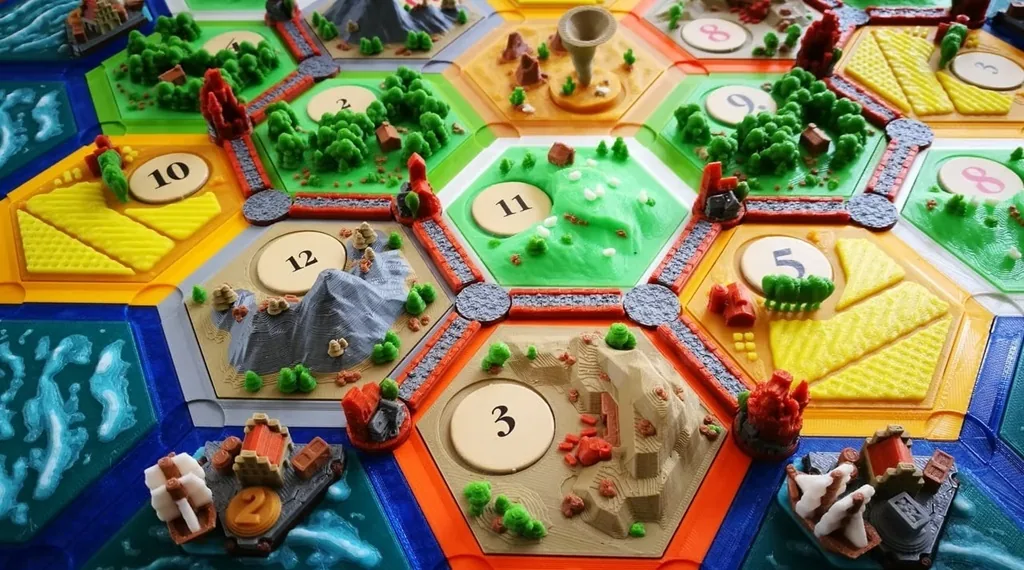
Traditional Board Games with FDM 3D Printing
Introduction
Board games have a long history of fun, strategy and socialization, but with the arrival of the digital age, they have faced challenges in maintaining their relevance. However, one technology has helped to revitalize this traditional sector: FDM (Fused Deposition Modeling) 3D printing. This article explores how 3D printing is transforming board games, offering new opportunities for creators and enthusiasts, with concrete examples of revitalized games and new projects.
What Is FDM?
FDM 3D printing involves layering molten plastic filament to create three-dimensional objects. With materials such as PLA and ABS, this technique allows the production of detailed and personalized parts at a relatively low cost, making it ideal for small productions and prototyping.
Applications in Board Games
1. Part Customization:
- Custom Parts: Creators can now produce unique parts for games, adding details and features that would not be possible or economical with traditional methods.
- Chess: New themed chess pieces, such as movie or historical characters, have been created, giving a new look to this classic game.
- Monopoly: Customized game pieces that reflect local culture or specific interests of players.
- Accessibility: Players can replace missing or worn parts, or modifying existing games to meet specific needs, such as accessibility for people with visual impairments.
2. Rapid Prototyping:
- Game Development: Game designers can quickly test new mechanics or design ideas without needing to invest in expensive molding.
- Catan: Prototypes of new expansions or game variants have been 3D printed for testing and adjustments, before being mass produced.
- Crowdfunding Campaigns: 3D printed prototypes are often used in crowdfunding campaigns to show backers exactly what they are funding, increasing transparency and trust.
3. Expansions and Mods:
- Custom Expansions: Fans and creators can develop and sell expansions or modifications for popular games.
- Dungeons & Dragons: Accessories such as monster miniatures, scenery, and custom terrain pieces have been gaining popularity.
- Modding Communities: 3D printing has nurtured modding communities, where players alter and improve games, keeping them fresh and interesting.
Examples of Revitalized Games and New Games Created
- Revitalization of Classics:
- Backgammon: 3D printing allows the creation of themed boards and pieces, revitalizing interest in this ancient game.
- Monopoly: New properties and themed pieces have been developed, bringing a modern touch to the game.
- New Games:
- Frosthaven: A sequel to the acclaimed Gloomhaven, where 3D printing is used for detailed miniatures and game components, offering a more immersive experience.
- Miniature Games: New games like "Streets of Steel" or "Mythic Battles: Pantheon" take advantage of printing 3D to provide detailed, customizable thumbnails.
Industry Revitalization
- Niche Market: FDM 3D printing has opened up niche markets for small businesses and independent creators.
- Education and Workshops: There is a growing interest in workshops and courses. design for 3D printing focused on board games.
- Sustainability: With 3D printing, there is greater potential for on-demand production, reducing material waste.
Challenges
- Quality vs. Costs: While FDM is affordable, the quality of parts may not match that of industrial manufacturing methods for large production volumes.
- Production Time: For larger scale projects, production may be slower.
- Copyright: Production of copyrighted game parts may raise legal issues.
Conclusion
FDM 3D printing is injecting new life into the world of board games, offering innovation, customization and market opportunities. The combination of technology and tradition is not only revitalizing the sector, but also creating a more vibrant, creative and inclusive community of gamers and designers. For companies and enthusiasts, 3D printing represents not just a production tool, but a springboard for creativity and entrepreneurship in the world of board games.