
Introduction
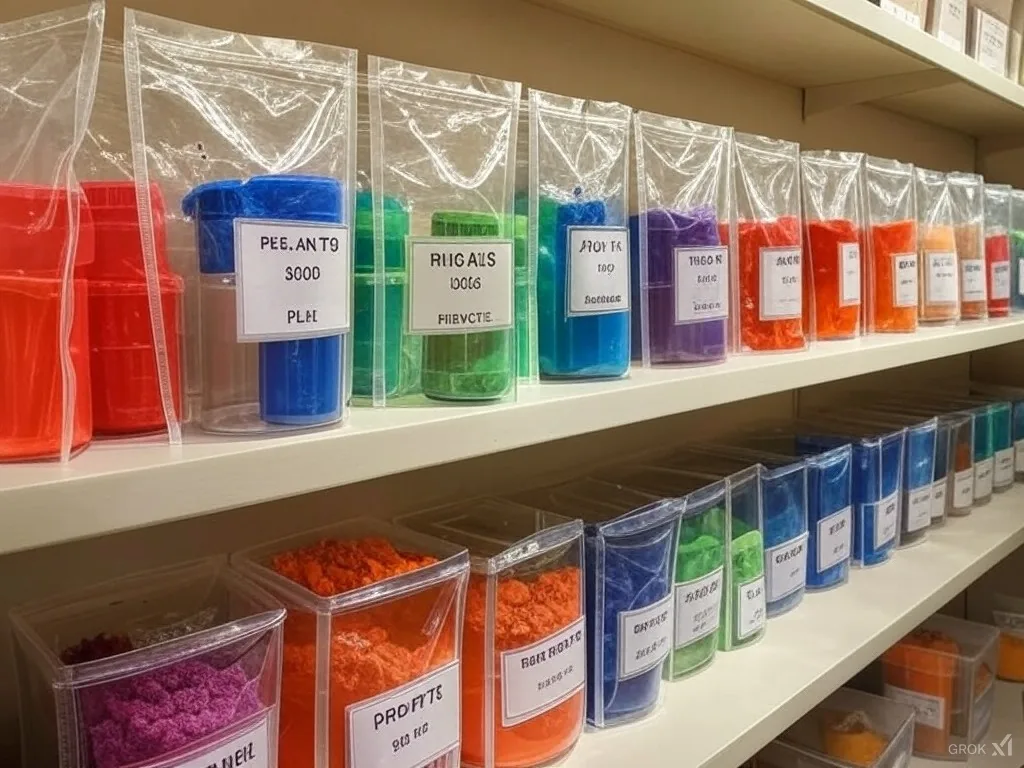
The coloring and functionalization of 3D printing filaments, such as PLA, PETG and ABS, is an art and science that involves the precise selection of pigments and additives to meet a wide range of aesthetic and functional needs. This article combines a technical look at the pigment mixing process with practical and industrial examples, demonstrating the versatility and innovation that 3D printing can bring to the world of manufacturing.
Pigment Selection
1. Organic Pigments:
- Characteristics:
- Offer a broad color palette with bright, vivid tones.
- Less stable at elevated temperatures and may be sensitive to UV light.
- Examples include azo dyes, phthalocyanines and quinacridones.
- Impact on the Filament:
- They can provide greater flexibility or elasticity to the material due to their molecular nature.
- Less resistant to fading, requiring additional UV stabilizers.
- Practical Example: PLA with Brilliant Blue - Using an organic azo dye to create a vibrant blue PLA filament, ideal for decorative pieces or prototyping where color is essential for aesthetics.
2. Inorganic Pigments:
Characteristics:- More thermally and light stable, ideal for materials that will be exposed to harsh conditions.
- More limited color range, often in opaque or pastel tones.
- Examples include iron oxides, titanium dioxide and chromium oxides.
Impact on Filament:
- Better heat resistance, suitable for ABS that is processed at higher temperatures.
- Can increase filament density.
3. Special Pigments:
Fluorescent:- Practical Example: Fluorescent PLA for Toys - Filaments that glow in the dark are used in the creation of educational or decorative toys.
- Practical example: Metallic PETG for Accessories - Mica pigments added to PETG for metallic effects in 3D printed jewelry.
- Practical example: Temperature Sensors in Heating Systems
- Thermochromic ABS is used to create visual temperature sensors in industrial heating systems.
- Practical Example: Phosphorescent PLA for Signage - Used in security applications such as emergency exit signage.
4. Functional Pigments:
Electrical Conduction:- Practical Example: Conductive PLA for Electrical Prototyping
- PLA filaments with conductive particles are used in component prototyping electronics.
- Practical Example: PETG Filament for Medical Equipment
- PETG with compounds antimicrobials is used for the production of parts that require high hygiene.
- Practical Example: Solar Energy Components
- PLA or PETG filaments with pigments that absorb UV are applied in the creation of components for solar panels.
- Practical Example: Flame Retardant ABS for Home Appliances
- Flame retardant additives are used in the manufacture of home appliance components that must meet fire safety standards.
- Practical Example: Reinforced PETG for Machine Parts
- Additives that increase impact resistance are added to create industrial parts that suffer frequent impacts.
Precise Dosage and Mixture
- Weighing Equipment: For electronic components, precise dosing of conductive particles is essential to ensure the functionality of the printed circuit.
- Masterbatch: In the case of phosphorescent PLA or antimicrobial PETG, a masterbatch is prepared to ensure uniform distribution of the pigment.
Extrusion and Verification
- Zone Temperatures: During extrusion, temperatures are adjusted to preserve the properties of special pigments, such as thermochromic or flame retardant filaments.
- Color and Function Verification: Rigorous tests are carried out to ensure that printed components meet all standards, whether in color, weather resistance, impact, or conductivity.
Specific Considerations
- Compatibility: Each material may react differently to functional pigments, requiring adjustments to the production process or filament composition to avoid adverse reactions.
Challenges and Solutions
- Pigment Dispersion: Specific mixing methods prevent clumping, ensuring uniform properties throughout the filament.
- Impact on Properties: Continuous testing is done to monitor and adjust mechanical or thermal properties as needed.
Conclusion
The production of colorful and functional filaments for 3D printing is a field where technology, precision and creativity meet. From prototyping to mass production of industrial parts, the choice and application of specific pigments and additives offer innovative solutions, allowing the manufacture of products with personalized characteristics that meet the rigorous demands of the modern market. The combination of technical details with practical and industrial applications illustrates the transformative potential of 3D printing in manufacturing.