
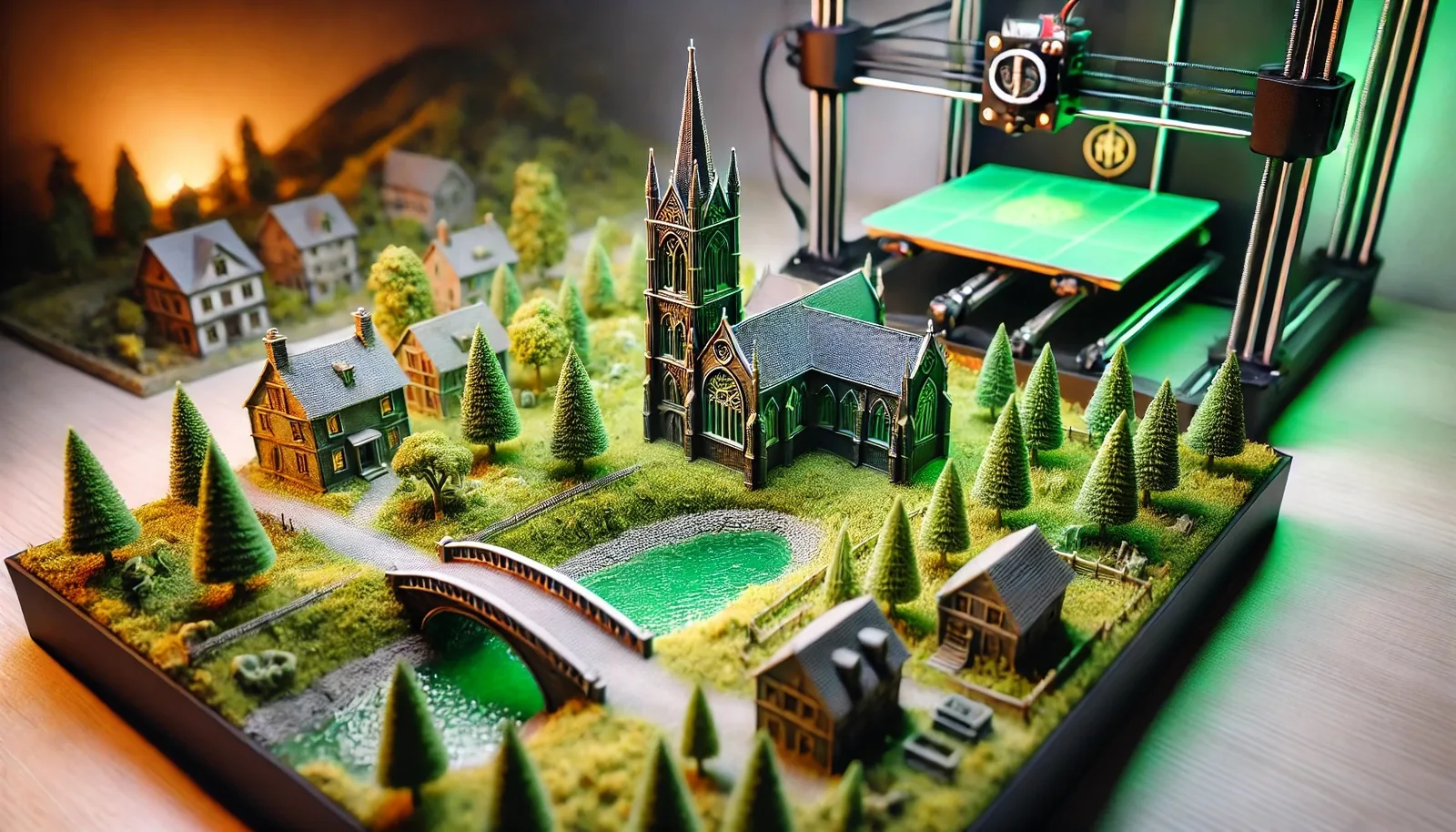
The Use of FDM 3D Printing in the Construction of Dioramas: A Creative Revolution
3D printing has transformed the way we create objects, and in the construction of dioramas — miniature representations of real or fictional scenes — this technology has proven to be a powerful ally. Among the available techniques, 3D printing by Fused Deposition Modeling (FDM) stands out for its accessibility, versatility and cost-benefit. In this article, we explore how FDM 3D printing can elevate the quality and creativity of diorama construction, as well as offering practical tips for those looking to get started.
What is FDM 3D Printing?
FDM technology works by depositing layers of melted plastic filament (such as PLA, ABS, or PETG) to form three-dimensional objects from a digital model. It is one of the most popular techniques due to the wide availability of affordable printers and ease of use, making it ideal for beginners and experienced modelers alike.
Why use FDM in dioramas?
- Unlimited Customization
With FDM 3D printing, you can create unique pieces that would be difficult or time-consuming to make by hand. From small accessories, like benches and posts, to complex structures, like buildings or vehicles, everything can be designed in modeling software (like Blender or Tinkercad) and printed accurately. - Saving Time and Materials
Instead of sculpting every detail by hand or buying expensive ready-made kits, FDM allows you to produce exactly what you need, reducing waste and costs. A practical example: it is possible to create detailed replicas of historic buildings in a few hours, perfect for period dioramas. - Scalability and Detailing
Adjusting the size of the pieces is simple, just change the scale in the slicing software (such as Cura or PrusaSlicer). Although FDM has limitations in extremely fine details (compared to resin), modern printers can achieve impressive results, such as 1:64 scale vehicles. - Integration with Traditional Techniques
Parts printed in FDM can be sanded, painted and textured, integrating seamlessly with classic materials such as wood, foam or plaster. This allows you to combine 3D printing with hand painting to create realistic scenes.
Application Examples
- Historical Settings: Recreate famous battles with tanks, soldiers or 3D printed ruins such as bridges or weathered buildings.
- Fantastic Worlds: Build castles, dragons or spaceships for fantasy or fiction dioramas scientific.
- Educational Projects: Teachers and students can use printed dioramas to interactively illustrate historical or geographic concepts, such as villages or natural landscapes.
Tips for Getting Started
- Choose the Right Filament
PLA is ideal for beginners due to its ease of printing and finishing. For stronger parts, such as bases or structures exposed to heat, try PETG or ABS. - Adjust the Printer
Use a lower layer height (e.g. 0.1 mm) for finer details and adjust the speed to avoid imperfections. Test on small pieces before larger projects. - Post-Processing
After printing, sand the pieces to smooth visible layers and apply primer before painting. Techniques such as drybrush or wash highlight details. - Template Sources
Sites like Thingiverse and MyMiniFactory offer free ready-to-print templates. For something unique, learn the basics of 3D modeling or hire a designer.
The Future of Dioramas with FDM
FDM 3D printing is just starting to show its potential in the world of dioramas. With the advancement of printers and the popularization of special filaments (such as those that imitate wood or metal), the limits are increasingly in the creator's imagination. At Tucab, we believe this technology not only makes creation easier, but also inspires a new generation of artists and modelers to explore what's possible.
Ready to turn your ideas into incredible miniatures? Grab your printer, choose a project and dive into this fascinating universe!