
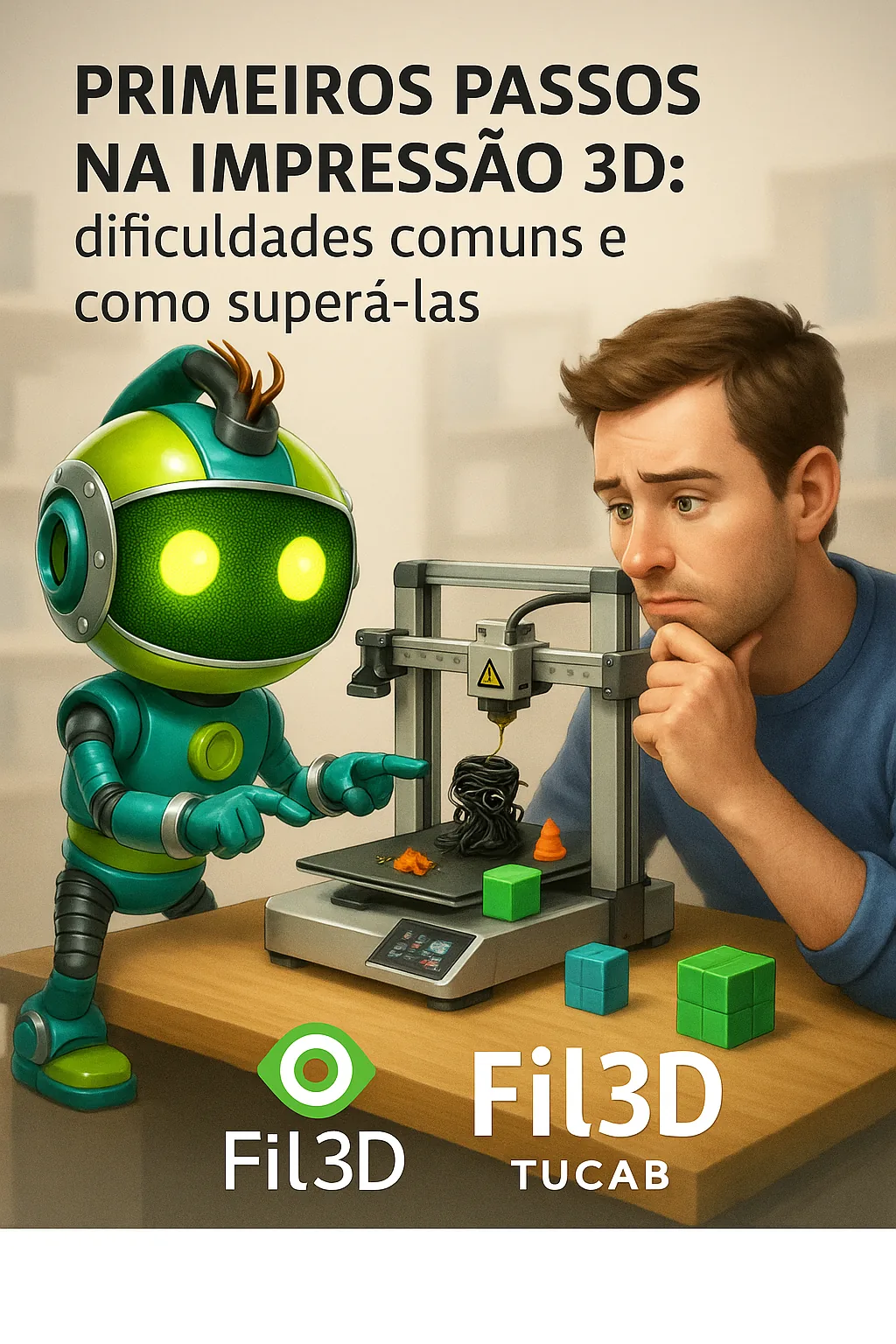
Getting started in 3D Printing: common difficulties and how to overcome them
An essential Fil3D guide for demanding beginners
3D printing may seem complex at first glance. Between acronyms, temperatures, retractions, slicers and mechanical noises, there are many points that scare those just starting out. But the truth is that, with some knowledge and the right materials, it is possible to transform frustration into confidence, creativity and impressive results.
At Fil3D, we want to help you enter this world on the right foot.
Choosing the right printer: the first challenge
The first decision has an impact on everything else: which printer should I use? buy?
For beginners, the ideal is to opt for FDM (Fused Deposition Modeling) models, which use filaments such as PLA or PETG. Avoid printers that require very technical manual calibrations or constant maintenance right from the start.
Practical suggestions:
-
Prefer printers with automatic base leveling (BLTouch, optical sensors, etc.)
-
Check if they have a heated bed, important for adhesion of the first ones layers
-
Touchscreen and Wi-Fi interfaces make learning easy
-
A good starting option: Bambu Lab A1 Combo or Creality Ender 3 Neo (open environment) with automatic updates and community support
Right filament for the right application
The type of filament influences temperature, adhesion, printing speed and even the final appearance. Using the wrong material can lead to failure, warping or weak parts.
Recommended filaments to start with:
-
PLA: rigid, easy to print, ideal for decorative models, toys and parts that do not require heat resistance.
-
PETG: slightly flexible, stronger and longer lasting, good for functional parts, supports, exterior parts.
-
ABS: strong and heat resistant, but difficult for beginners — requires closed chamber and ventilation.
-
Fil2ndLife (Recycled Filament): more sustainable, perfect for prototypes, tests, one-off parts.
Fil3D Tip: start with PLA and then try PETG when you feel comfortable with the settings.
Adhesion to the base: the biggest enemy at the beginning
A perfect print starts... with the first layer. When the base doesn't adhere, the piece moves, raises the corners or doesn't print at all.
How to avoid this:
-
Make sure the bed is level (even with self-leveling, do a manual test with A4 paper)
-
Use a good adhesion surface: textured glass, magnetic PEI, or blue tape
-
Apply glue stick, hairspray, or 3D-specific hairspray if necessary
-
Heat the bed to 60°C for PLA or 70–80°C for PETG
Fil3D tip: print a “layer test” (square with 1 layer) before starting large models.
The most common mistakes and how to correct them
Even with everything right, you can encounter problems such as:
Subextrusion:
Not much plastic comes out of the nozzle → see if it is clean, increase temperature or flow rate.
Quick solution: raise 5–10°C and see if it improves.
Warping:
Corners of the piece lift → cold bed or poor adhesion.
Quick solution: use denim/raft, increase bed temperature, activate fan after 3rd layer.
Stringing:
Fine threads between zones → turns off retraction or increases it.
Quick solution: increases retraction distance and slightly lowers temperature.
Adjustments and basic maintenance
The printer is a machine — it needs regular care.
Essential checklist:
-
Clean the nozzle with a cleaning needle or perform a "cold pull"
-
Tighten loose screws and check the belts
-
Lubricate the shafts and guides with technical oil
-
Update printer firmware whenever possible
Light maintenance every 20 hours of printing prevents 90% of future problems.
Where to find 3D models ready to print
You don't need to know how to model to print.
Sites with thousands of free models:
Practical tip: print supports for your own bobbin, tool box, organizers or shelves — useful and perfect for training.
Start with the right support: Fil3D with you from the start layer
At Fil3D, we develop filaments with industrial quality and strict tolerance — but we also care about who gets started.
We want you to feel confident, informed and motivated to explore everything 3D printing has to offer.
Do you have questions?
Talk to us — and start printing with head, extruder and heart.