
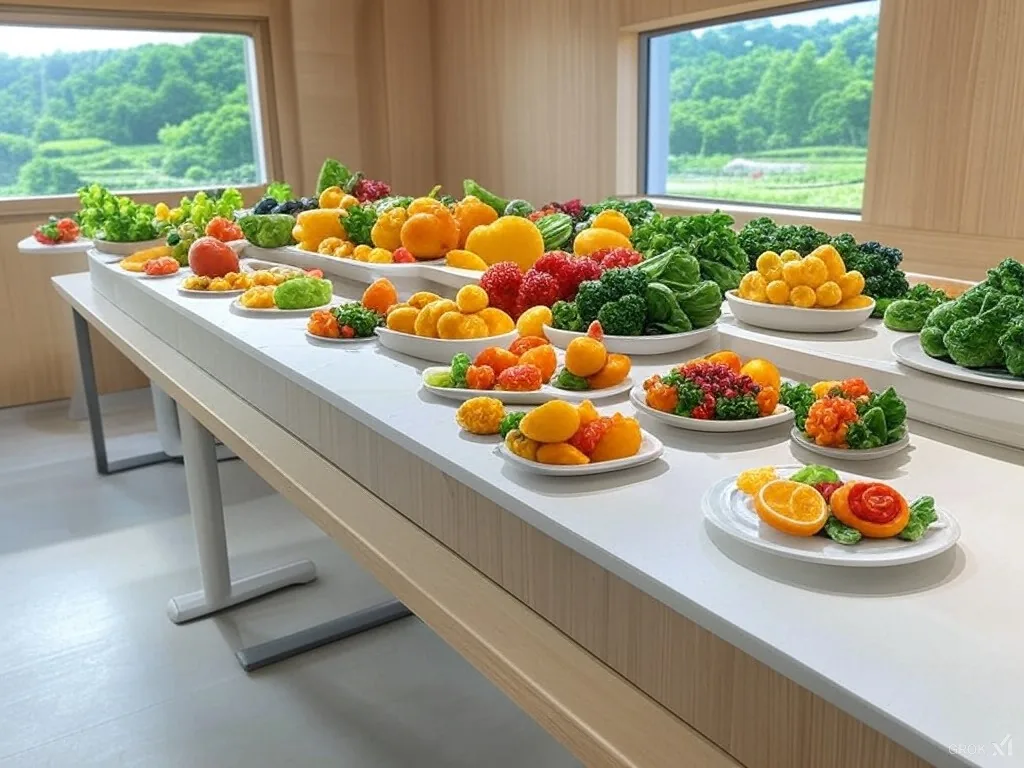
FDM 3D printing is not limited to plastics and metals; is expanding into areas such as food and agriculture, offering innovative solutions to address global challenges such as hunger and food sustainability.
Sustainable Food Production
3D printing allows food to be created more efficiently and with fewer resources. This includes the production of lab-grown meat, which can be a sustainable alternative to traditional animal agriculture, reducing the environmental impact of food production.
Practical Example: Cultured Meat in Singapore
In Singapore, scientists are exploring 3D printing to produce cultured meat. This method uses animal cells to create meat in a laboratory, eliminating the need to raise animals for consumption. 3D printing allows the design of meat structures that mimic the texture and flavor of conventional meat, but with a much smaller ecological footprint.
Precision Agriculture
The technology can also be applied in agriculture to create personalized tools such as soil sensors or irrigation systems adapted to the specific needs of different crops, increasing efficiency and reducing water and nutrient waste.
Education and Innovation in Agriculture
FDM 3D printing is being used to educate farmers about sustainable practices through 3D models of agricultural systems, enabling a clearer visualization and understanding of technological innovations that can be implemented in their daily practices.
Challenges and Opportunities
While the application of 3D printing in food and agriculture is in its early stages, the challenges of scalability and consumer acceptance are real. However, the opportunities to reduce environmental impact, improve food security and innovate in food production are enormous.
Conclusion
FDM 3D printing is opening innovative paths in food production and agriculture, offering solutions for sustainability and food security. At Tucab, we are exploring these possibilities, aiming for a future where food technology can be as revolutionary as manufacturing technology. For more information on how we can collaborate on sustainable food projects, visit tucab.pt.