
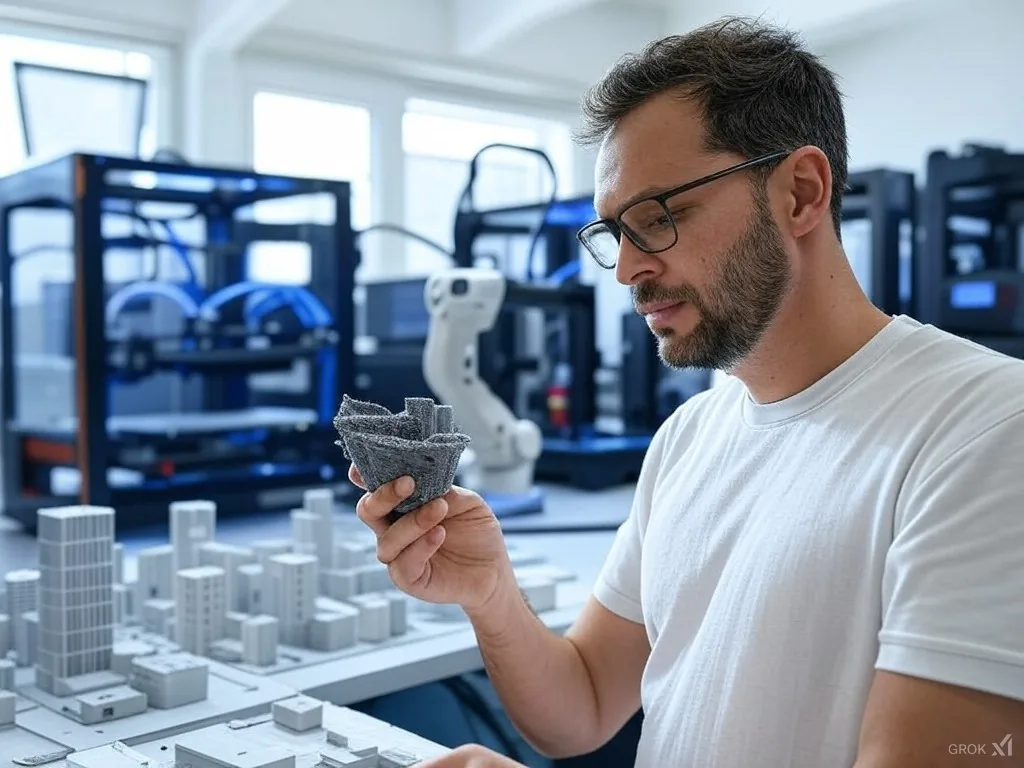
In an era where sustainability has become imperative, FDM (Fused Deposition Modeling) 3D printing emerges as an innovative solution for reducing waste in manufacturing. At Tucab, we are exploring how this technology can be a crucial tool in the fight against waste.
Waste Reduction in Manufacturing
Traditional production often results in excess unused material, especially in molding and machining processes, where parts are subtracted from larger blocks of material. FDM 3D printing, on the other hand, adds material layer by layer, only where necessary, minimizing waste.
Practical Example: Automotive Industry
A clear example is the automotive industry, which can benefit greatly from FDM 3D printing. In Portugal, a company began using this technology to produce replacement parts on demand. Previously, large quantities of parts were manufactured and stored, often resulting in leftovers that were never used. With 3D printing, each part is manufactured as needed, significantly reducing material waste. Furthermore, recycled materials can be used, promoting a more sustainable life cycle for products.
Environmental Impact
Waste reduction not only reduces the ecological footprint of production but also reduces the costs associated with disposing of materials. FDM 3D printing allows for more efficient design, where structure optimization can lead to lighter parts with less material, contributing to the circular economy.
Conclusion
FDM 3D printing is redefining sustainability in manufacturing, offering a viable alternative to reducing waste and promoting more environmentally friendly practices. At Tucab, we are committed to using this technology to help create a greener future. For more information on how we can help your company adopt sustainable practices through 3D printing, visit us at tucab.pt.